



















































Platform · Features
One pipeline.
The full catalog of what the platform does — every feature, grouped by the pipeline stage it serves. Each feature is a two-minute read with the screen it happens on.
Built for the feed
to your payload.
Transform at catalog scale.
Conditional mappings, lookup tables, and reusable rule sets — fix an attribute once and it propagates to every channel.

The monitoring loop.
Approvals, warnings and rejections per SKU, per channel — triaged by revenue at risk, not by error code.
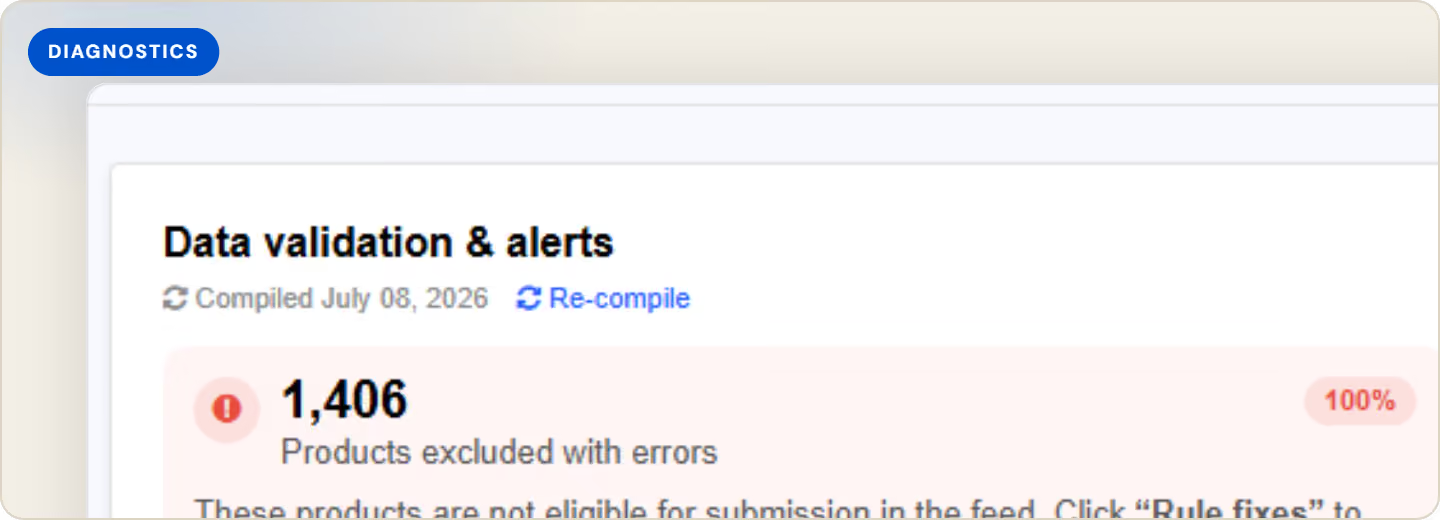
Maintained specs for every channel — mappings stay current when the spec drifts.
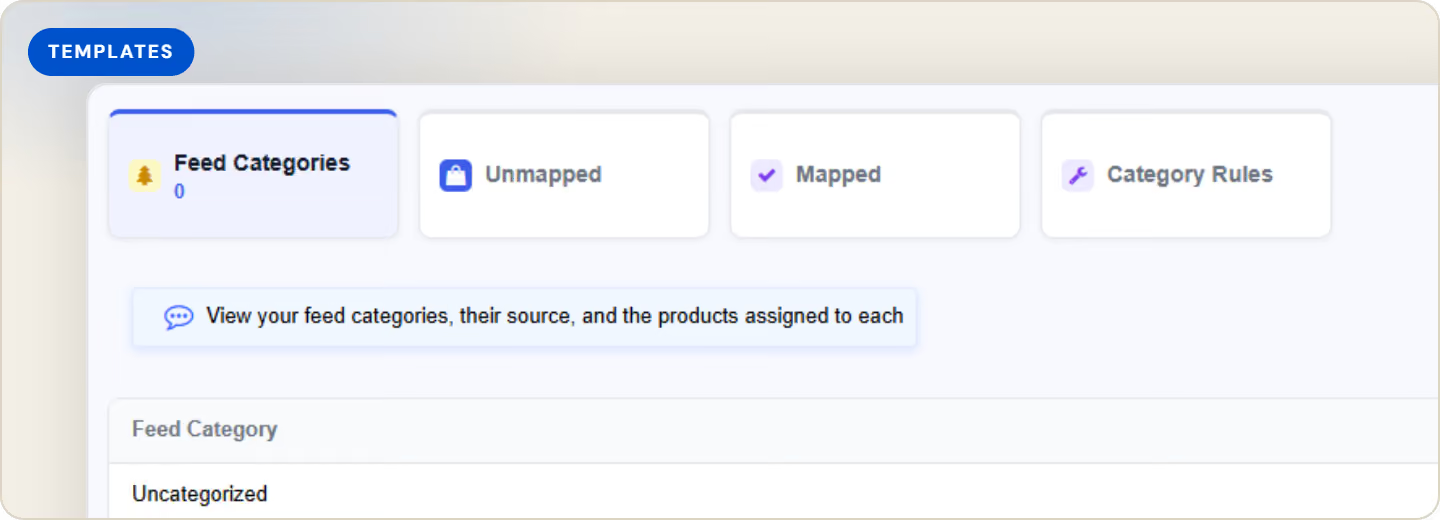
Every SKU checked against the channel's rulebook before it leaves the building.
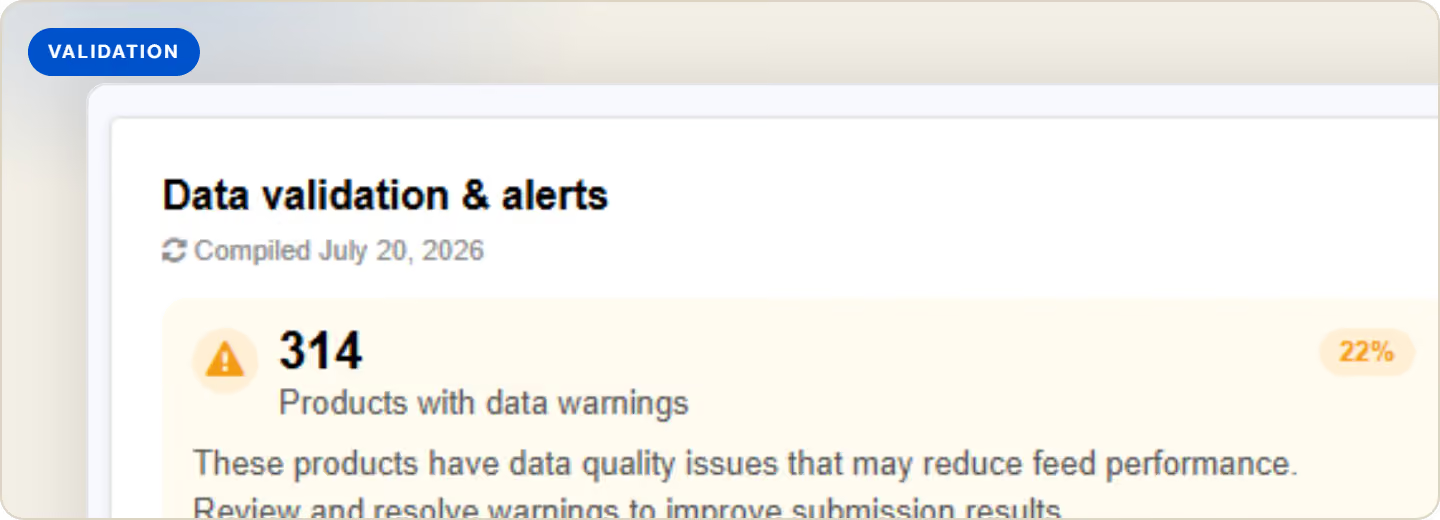
Price and stock move hourly or better — the mismatch-suspension killer.

Stage 1-2
Getting the catalog in, whole — and turning it into one clean master record.
Store connectors
Shopify, BigCommerce, Magento and file imports — variants and inventory intact.
Multi-source merge
Join ERP, PIM and store data into one record per product.
Catalog audit
New
Every gap, duplicate and malformed attribute flagged at import.
Variant model
One canonical variant structure, remapped per channel downstream.
Field normalization
Units, casing, encodings and currencies standardized on entry.
Scheduled imports
Pull on your cadence — hourly to weekly, per source.
Stage 3
Rule-driven fixes that apply across the catalog — never row by row.
Rules engine
If/then transforms with preview — see affected SKUs before you commit.
Title builder
Compose titles from attributes, per channel's ranking recipe.
Lookup tables
Bulk value mapping — your categories to each channel's taxonomy.
AI attribute fill
New
Derive missing attributes from description text with AI.
Image rules
Crop, pad and swap images per channel spec — square for Meta, white for Amazon.
Supplemental data
Layer promo copy, custom labels and seasonal fields without touching source.
Stage 4
One master record, reshaped to every channel's exact contract.
Channel templates
Maintained mappings for 200+ integrations — current when specs drift.
Custom exports
Any format, any schema — CSV, XML, API, or a partner's house spec.
Per-channel overrides
Diverge a field for one channel without forking the catalog.
Product sets
Segment which SKUs go to which channel — by margin, stock, or label.
Intraday sync
Price and availability pushed as they move, not on tomorrow's run.
Multi-locale feeds
New
Language, currency and local spec per market, one catalog behind it.
Stage 5-6
Catch errors while they're free — and read what the channel sends back.
Pre-submission validation
Channel rulebook checks on every SKU, before publishing.
Diagnostics view
Approvals, warnings, rejections — per SKU, per channel, one screen.
Error playbooks
Each channel error mapped to its data fix, linked from the row.
Alerting
Eligibility drops and sync failures to email or Slack, thresholds yours.
Feed history
Every published version diffable — what changed, when, by which rule.
Revenue-at-risk triage
New
Errors ranked by the sales the affected SKUs actually drive.
Across the pipeline
For agencies and teams running more than one catalog.
Integrations
your whole stack.
200+ integrations, including shopping engines, 3P marketplaces, affiliate, social commerce and shopping cart platforms — every feature above works with all of them.
Questions
Are all features included in every plan?
The pipeline stages are in every plan. A handful of team features (multi-store workspace, audit log) are plan-gated — each feature page states its plan availability.
Do features differ by channel?
The pipeline is channel-agnostic; templates and validation rules are channel-specific. A feature that mentions a channel works identically for the others unless its page says otherwise.
How do I know which features I need?
Start from the diagnostics: run a free feed audit and it will point at the stages — and the specific features — where your catalog is losing eligibility.
Start a 14-day trial or book a demo — we'll audit your feed free and map the findings to the features above.