



















































Platform / Features /
Multi-locale feeds
Feature · Map & syndicate
Localized downstream.
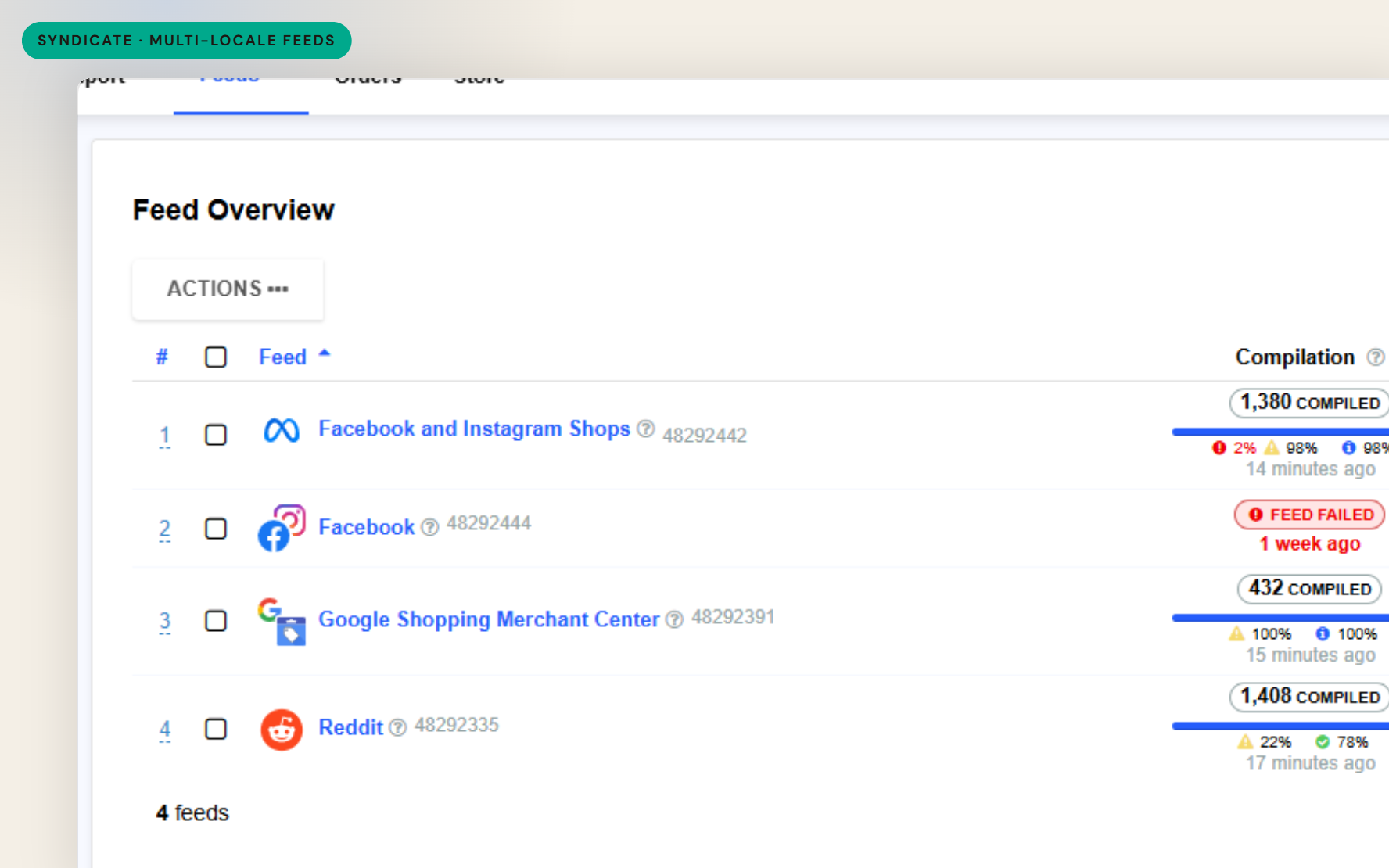
Selling into new markets multiplies feed work - language, currency, local requirements. Multi-locale feeds are designed to carry market-specific output per destination with one catalog behind all of them.
The difference
Without GoDataFeed
With GoDataFeed
How it works
Language, currency and local spec per market, one catalog behind it.
Benefits
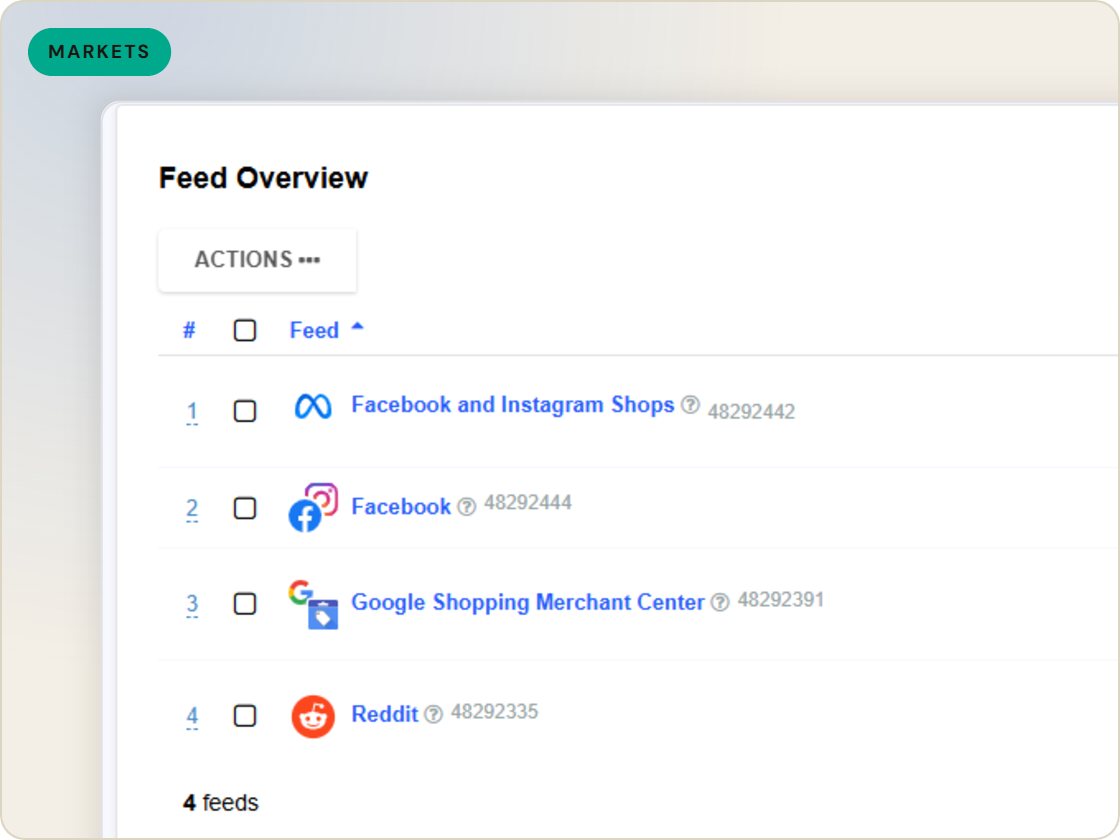
New markets add feeds, not catalog copies.
Every locale describes the same underlying record.
A catalog correction is meant to reach all markets at once.
Market-specific requirements get addressed per feed.
One pipeline serves the international footprint.
The next market is an output, not a project.
Capabilities
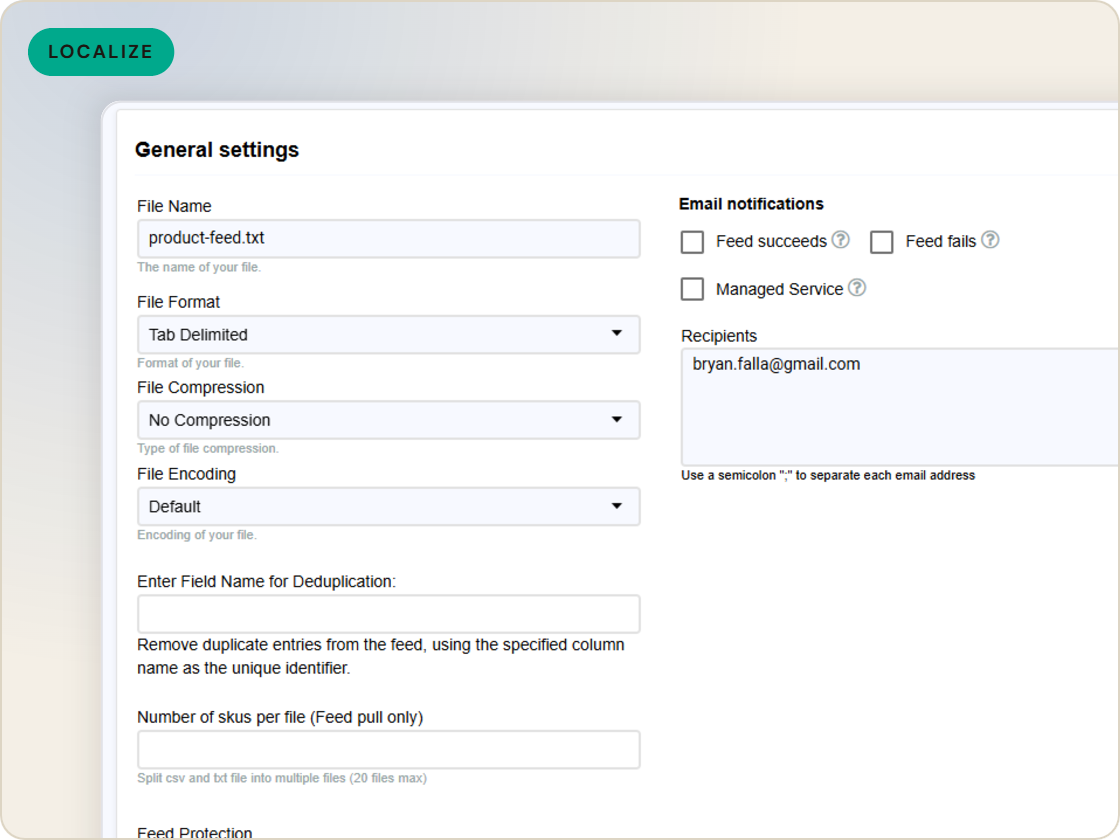
Designed to give each destination market its own feed - language fields, currency and formatting appropriate to the locale.
Built for the reality that a channel's German spec is not its US spec - market variants of a channel are treated as their own destinations.
The point of the design: expansion multiplies outputs, not catalogs. Your master record stays singular.
Feature · Map & syndicate
Designed to serve every market from one catalog - per-locale language, currency and requirements handled in the feed layer, not in catalog copies.
Multi-locale feeds
of six.
Localize one catalog per market.
1
Ingest the catalog whole, variants intact.
2
Fix attributes once, at catalog scale.
3
Maintained mappings for 200+ integrations, current when specs drift.
4
Catch errors before they ship, while they're free.
5
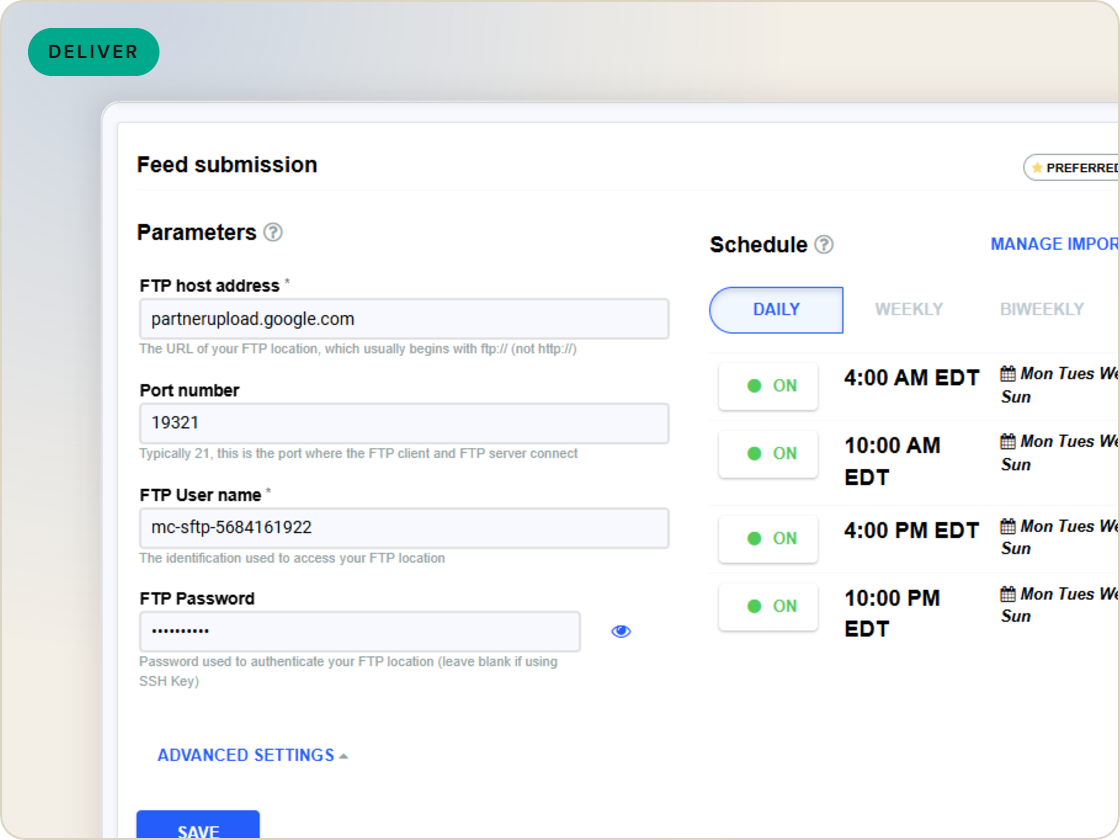
Push validated feeds on schedule, price and stock current.
6
Read every channel' feed's verdict back on one screen.
Questions
Per destination feed - each market's output is designed to carry its own language fields, currency and formatting.
No - the design keeps one master catalog, with localization applied in the feed layer.
Market variants of a channel are treated as their own destinations, each with its own requirements.
Start a 14-day trial or book a demo — we'll audit your feed free and show you your diagnostics baseline.
Also in the box
needs.
Eligibility drops and sync failures to email or Slack, thresholds yours.
Every published version diffable — what changed, when, by which rule.
The same rulebook checks, run before publishing instead of after.
Each channel error mapped to its fix, linked from the row.
Weekly eligibility digest per store, for the people who don't log in.
Diagnostics data in your own BI, if that's where your team lives.