
















































Marketplace
before shoppers ever see them.
Walmart Marketplace grades item data through its Listing Quality framework and buries what falls short. GoDataFeed maps your catalog to Walmart’s spec, fills the required attributes and keeps price and stock current.
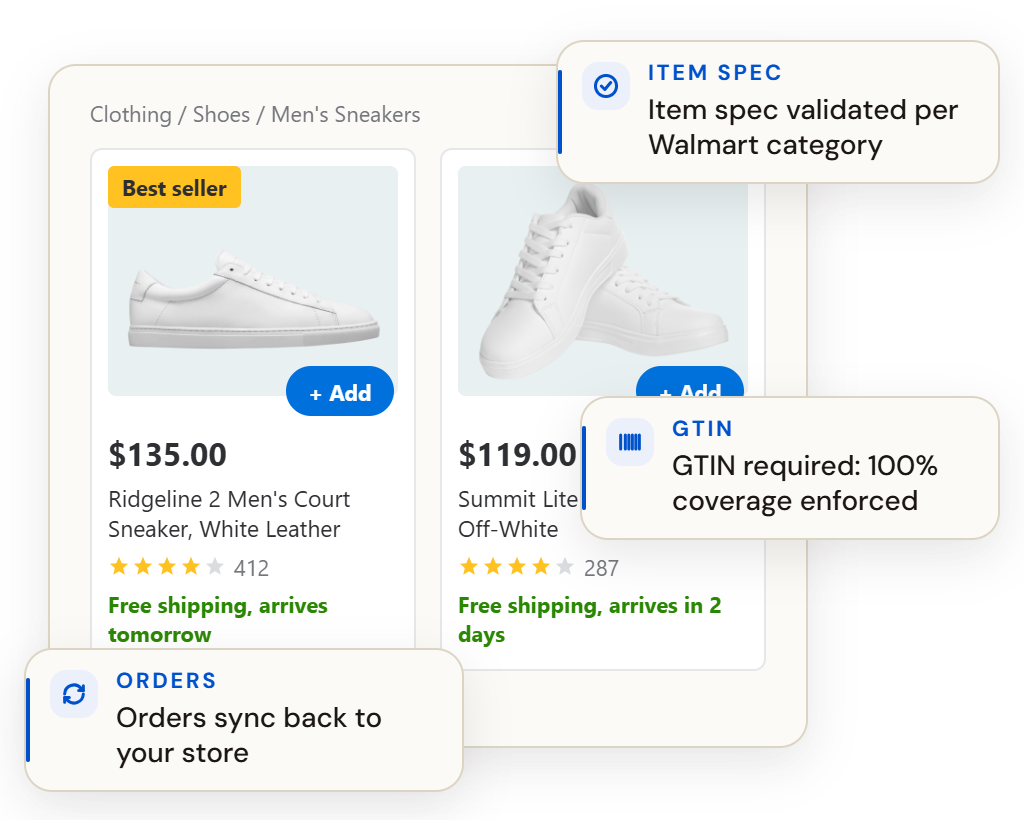
Why item data ranks
Walmart reads attribute completeness, content quality and offer competitiveness straight from your item data. Gaps do not just lower a score - they push products out of search placement.
Categories, required attributes and content fields built to Walmart’s item spec by rule.
The fields Listing Quality measures, populated and validated across the catalog.
Sizes and colors structured so families list as one item with options, not duplicates.
Scheduled syncs protect against oversells and keep offers competitive and accurate.
How it works
01
Your full catalog imports automatically with variants, imagery and inventory.
02
A maintained template covers taxonomy and required attributes; your rules refine them.
03
Validated items push on schedule with feed health tracked in one dashboard.
Thirty minutes, live, on your data — the mapping, the rules, the validations, the fix list. Or watch the demo tour first: the recorded version, no meeting required.
1
catalog behind Walmart and every other marketplace you sell.
60+
channels one connection can feed.
0
items buried for attribute gaps a rule could fill.
Questions, answered
What drives Walmart Listing Quality?
Attribute completeness, content quality and offer accuracy - all read from your item data. Rules populate and validate the fields that move the score.
What blocks items at setup?
Taxonomy mismatches, missing required attributes and malformed variants. Pre-push validation catches them before submission.
How does inventory stay accurate?
Stock and price sync on your schedule, protecting your seller metrics from oversells.
Go deeper
At a glance
Type
Channel
Connection
Feed format
Refresh
Order sync
Yes
No
Plan
Identity key
Before you start
Note
GoDataFeed optimizes, enriches, validates, and keeps your product data in sync across Google, Meta, marketplaces, and AI shopping.