



















































Platform / Features /
Multi-source merge
Feature · Ingest & catalog
Joined, not juggled.
Product data rarely lives in one place. Multi-source merge joins your store, ERP and supplier files into a single catalog record per product - so every channel works from the same facts.
The difference
Without GoDataFeed
With GoDataFeed
How it works
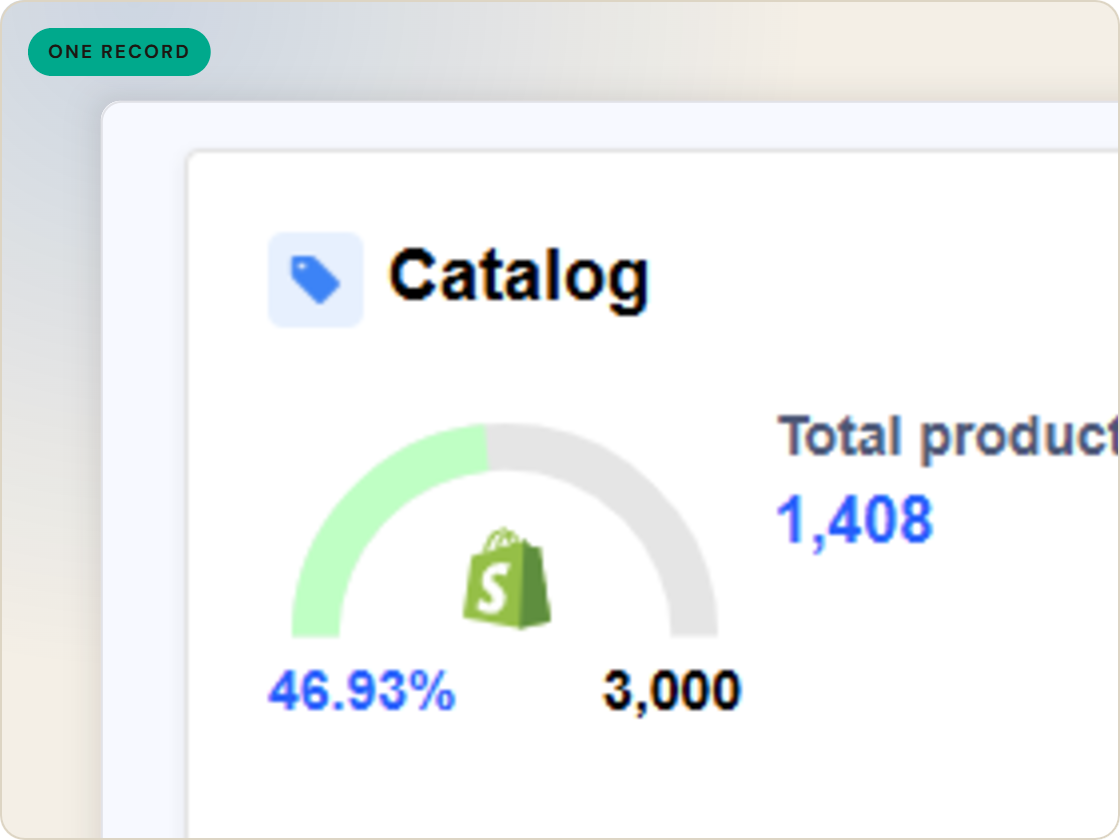
Join ERP, PIM and store data into one record per product.
Benefits
A single record per product, assembled from your best sources.
Channels stop seeing three versions of the same product.
Corrections made at the source reach every feed.
No system migration - data joins where it already lives.
Questions get answered from one merged file, not four exports.
Every destination works from the same assembled record.
Capabilities
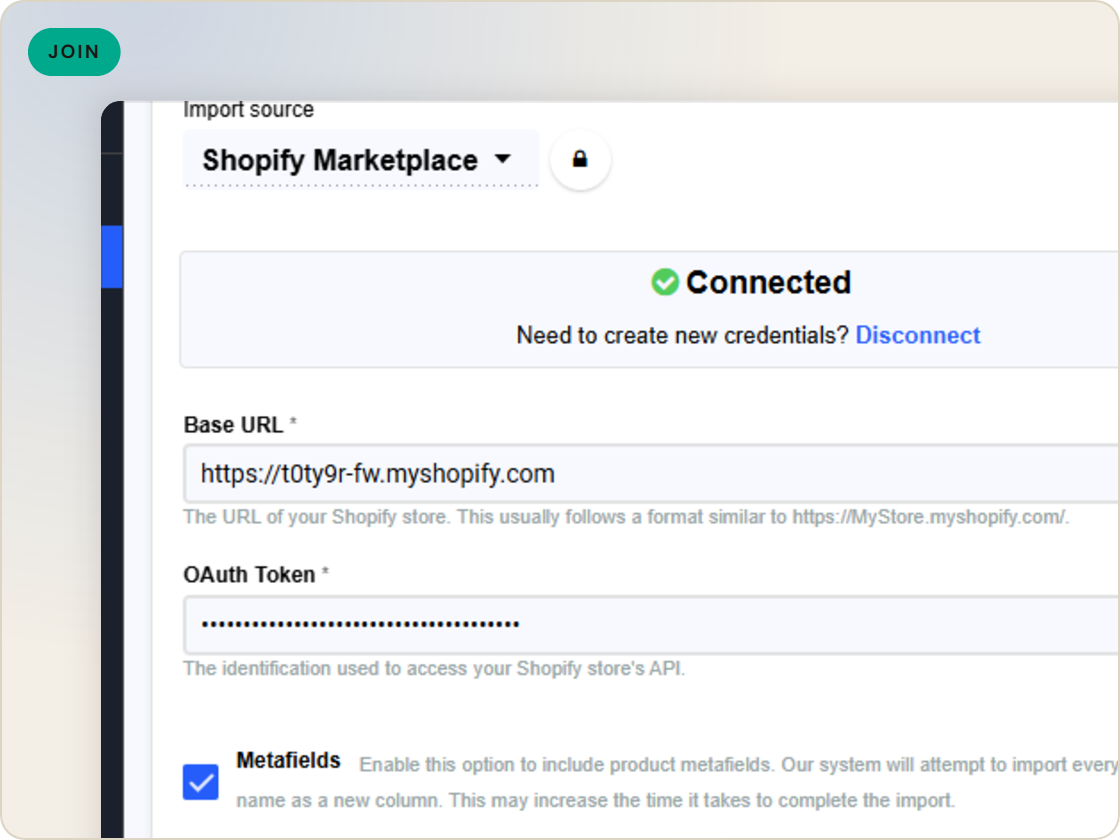
Store connectors and file sources come together in one import, matched on a shared identifier like SKU.
Decide which source supplies which field, so the ERP's price and the PIM's copy stop fighting.
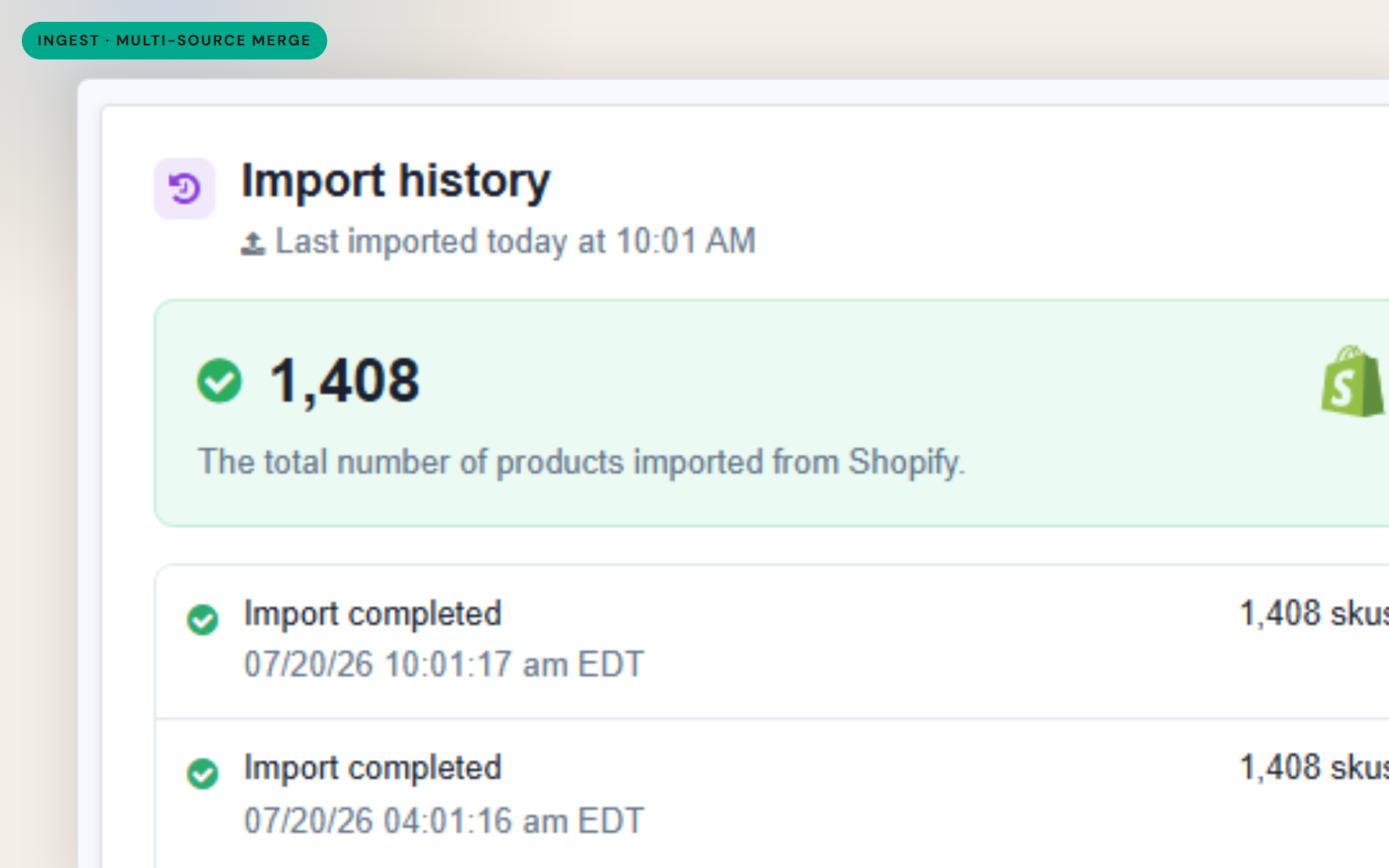
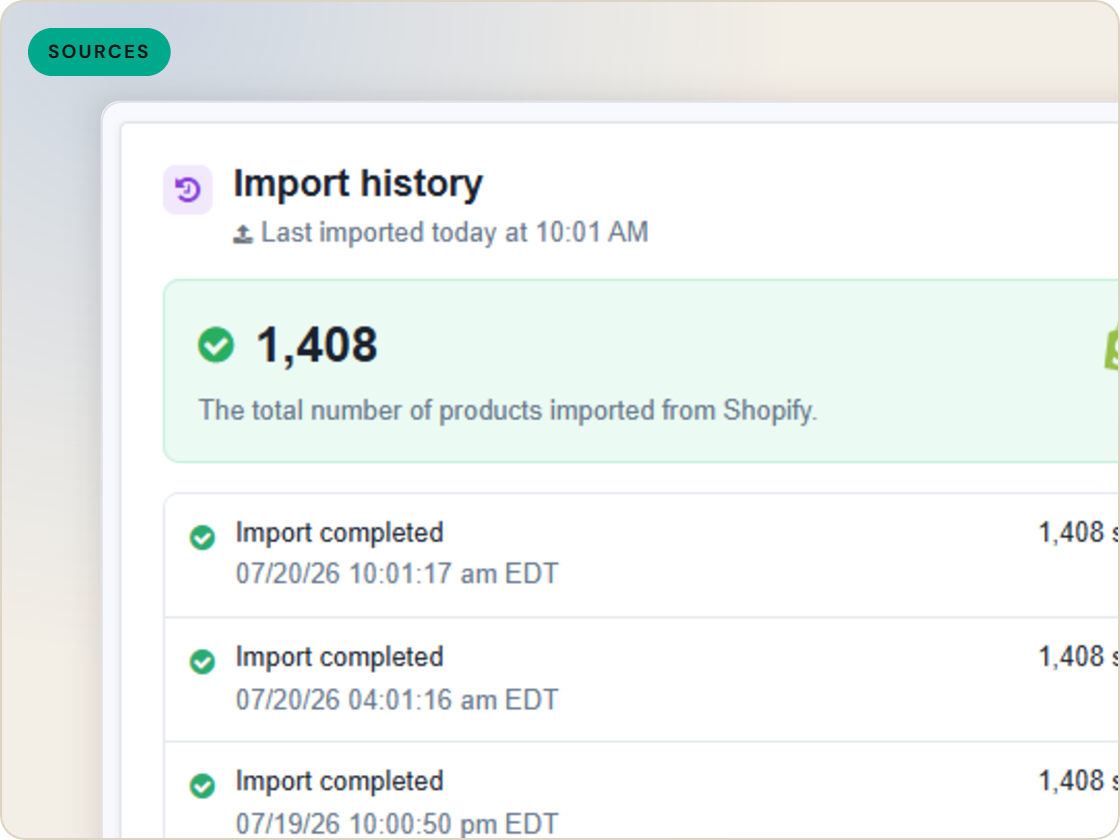
Download the merge file from import history and see the joined result - the record every channel will work from.
Feature · Ingest & catalog
Join store, ERP and supplier data into one catalog record per product - matched on SKU, with a downloadable merge file to prove what joined.
Multi-source merge
of six.
Join every source into one record.
1
Ingest the catalog whole, variants intact.
2
Fix attributes once, at catalog scale.
3
Maintained mappings for 200+ integrations, current when specs drift.
4
Catch errors before they ship, while they're free.
5
Push validated feeds on schedule, price and stock current.
6
Read every channel' feed's verdict back on one screen.
Questions
Platform connectors plus files from upload, URL or FTP - store data, ERP exports, supplier sheets, PIM extracts.
On a shared identifier, typically SKU or another unique key present in each source.
Yes - import history lets you download the source file, the merge file and the resulting product catalog for any run.
Start a 14-day trial or book a demo — we'll audit your feed free and show you your diagnostics baseline.
Also in the box
needs.
Eligibility drops and sync failures to email or Slack, thresholds yours.
Every published version diffable — what changed, when, by which rule.
The same rulebook checks, run before publishing instead of after.
Each channel error mapped to its fix, linked from the row.
Weekly eligibility digest per store, for the people who don't log in.
Diagnostics data in your own BI, if that's where your team lives.