

















































Connect once. Publish everywhere, forever.
There is no migration, no re-platforming, and no rebuild of your catalog. GoDataFeed reads the product data you already have and does the translation work each destination requires.
What happens between your catalog and a live listing.
Ingest
We connect to the systems that already hold your products and read from them on a schedule. Nothing moves, nothing is rewritten at the source.
- Store platforms, ERPs, PIMs, supplier files
- Read-only by default
- Scheduled or triggered refresh
Normalize
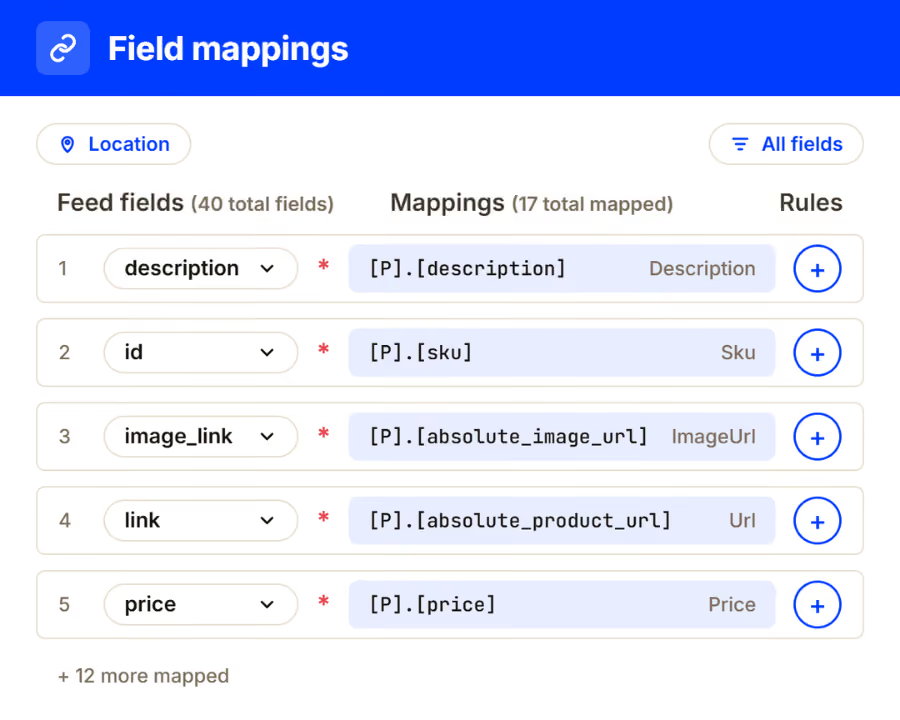
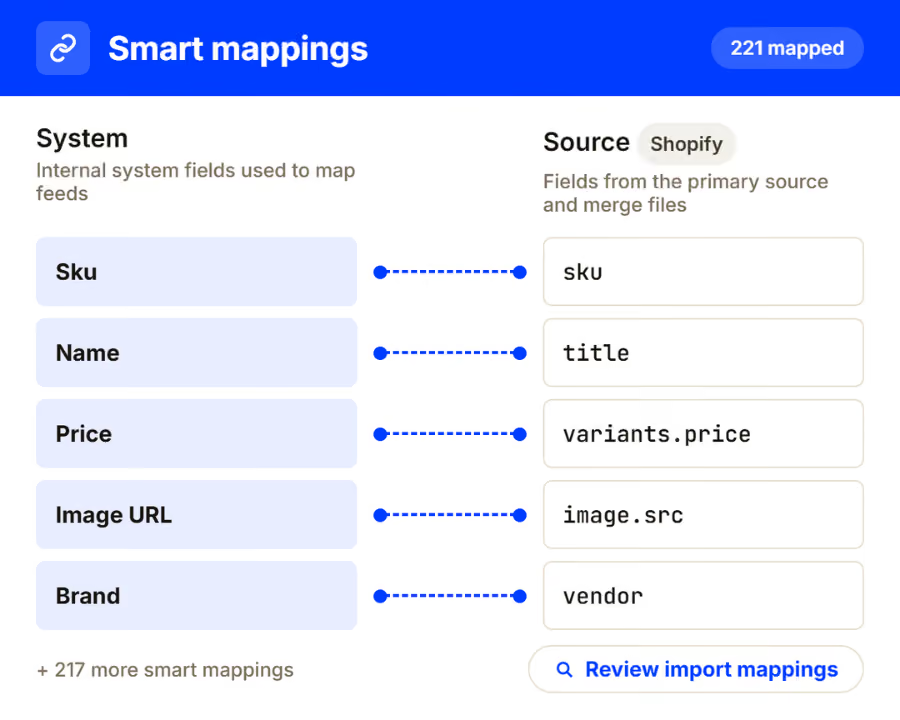
Everything arriving from every source is mapped into one schema. Duplicate fields collapse, missing attributes surface, and your catalog becomes something a machine can reason about.
- One mapped schema across all sources
- Gaps flagged before they cost you a listing
- Enrichment rules fill what can be derived
Shape per destination
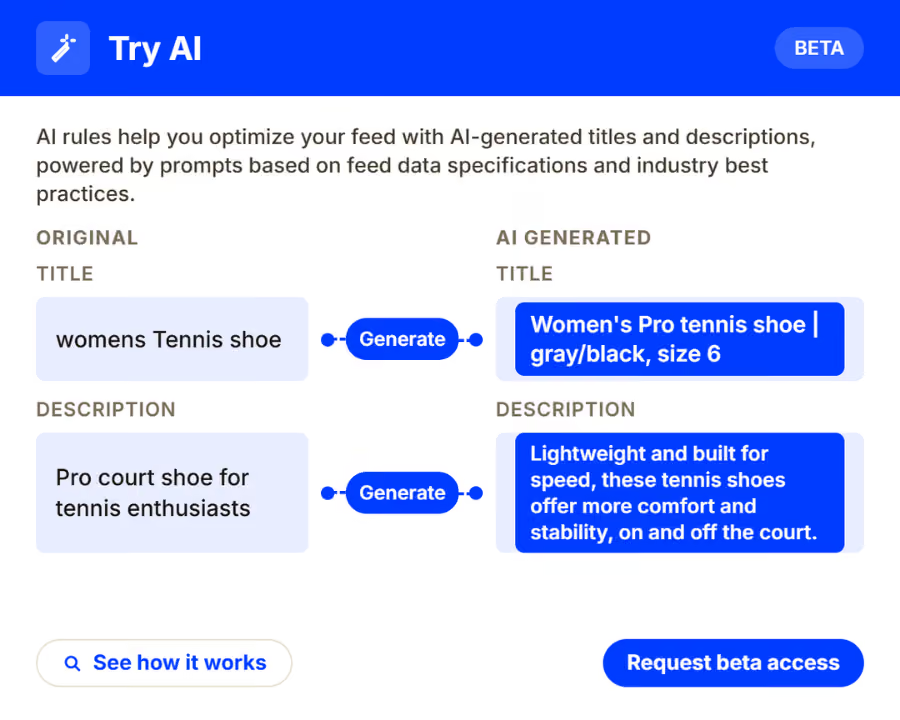
Each destination gets its own transformation — its attribute names, its category tree, its idea of what a variant is. Set the rules once and they apply to every product that arrives afterward.
- Per-destination rules and category mapping
- Variant structure rebuilt to each model
- Title and attribute logic you control
Validate
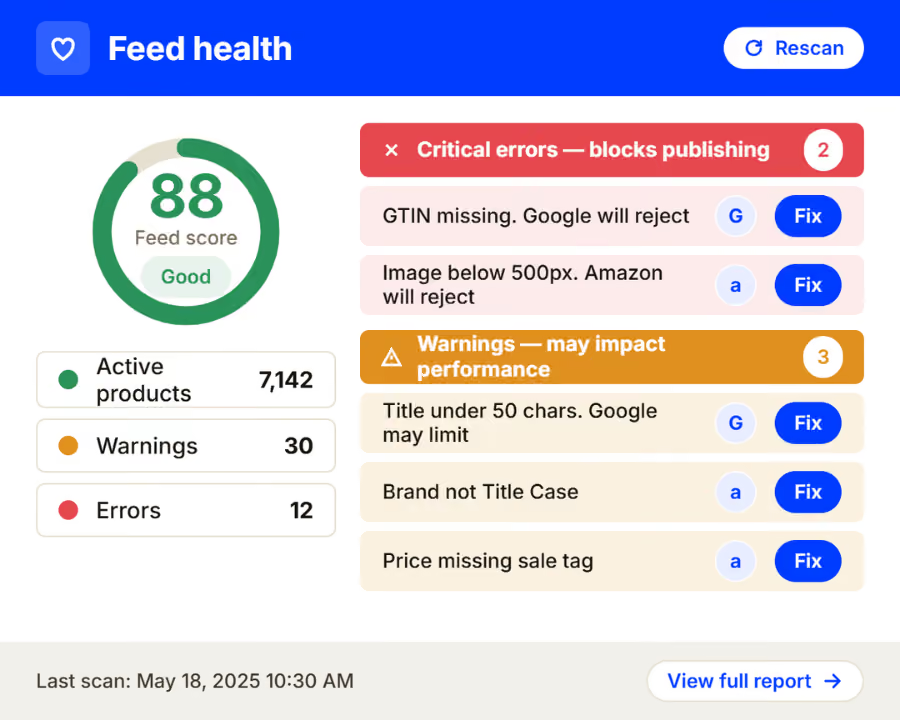
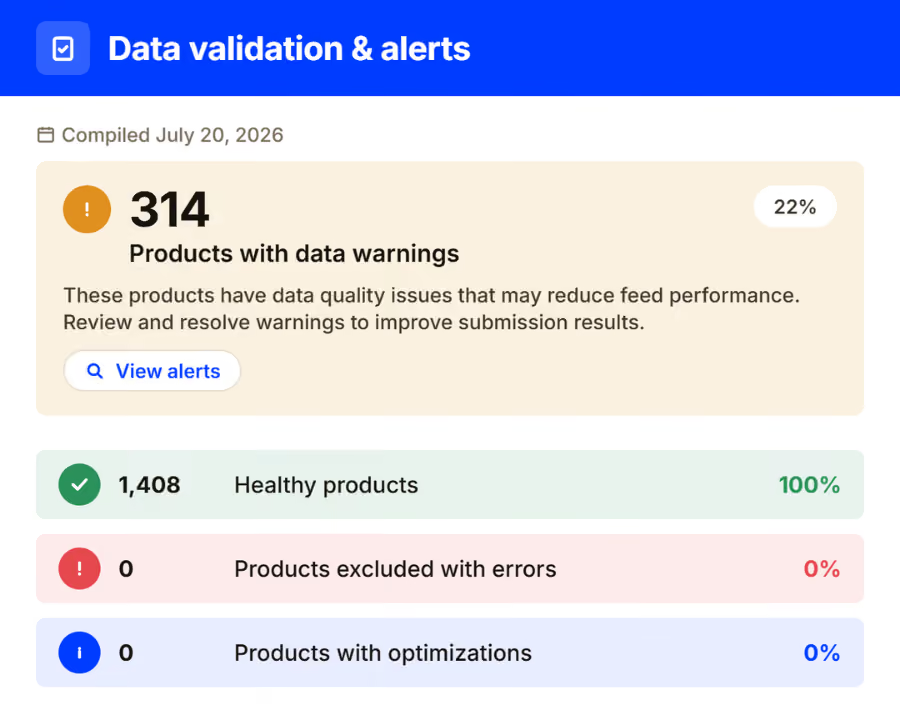
Before anything publishes, it is checked against the destination's current specification — not the one documented last quarter. Problems are caught here, where they cost nothing.
- Pre-flight validation per destination
- Specs tracked as they change
- Failures explained in plain language
Publish and maintain
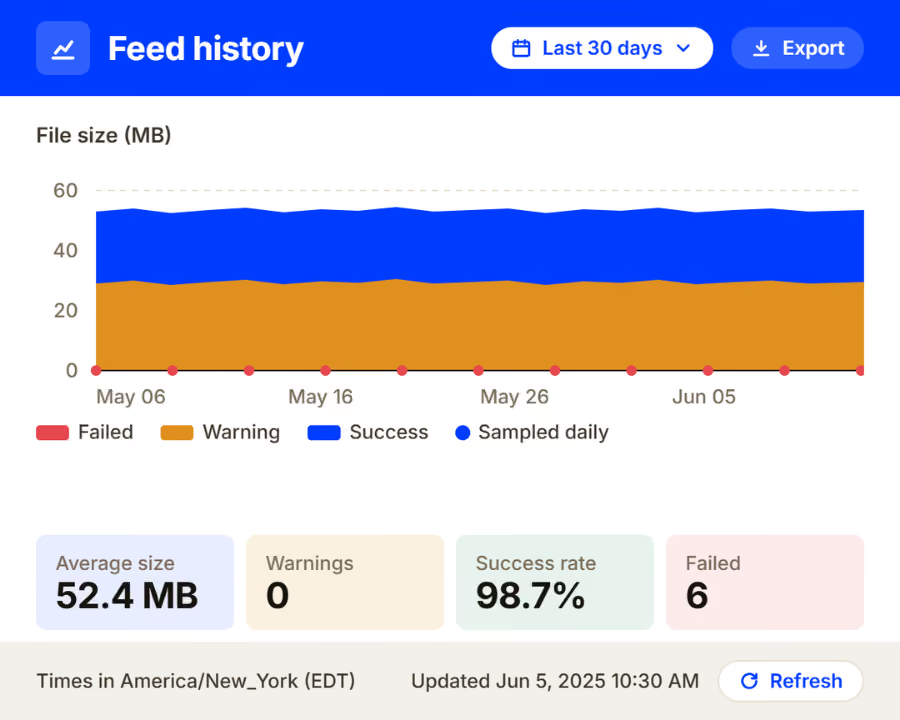
Listings go out and stay current. When your catalog changes, the change flows. When a destination changes its rules, the feed adapts instead of quietly failing.
- Scheduled and event-driven publishing
- Full audit trail of every change
- Health visibility per destination
Your product data isn't wrong. It's just wrong for the channel asking.
Every destination wants a different shape — its own attributes, its own categories, its own rules about what a variant is. Those rules change without notice, and the first sign of a change is usually a listing that stopped selling.
The work isn't glamorous: reading a spec, mapping a field, rebuilding a variant tree, checking it held. GoDataFeed does that work continuously, per destination, so your team spends its time on the catalog instead of the plumbing.
specs Changed. Nobody noticed.
Channels revise requirements on their own schedule. We track the current spec per destination and reshape your data before publish — not after a disapproval.
One source, many shapes
Map once. Every destination reads from the same clean catalog.
Variants that survive
Parent and child structure rebuilt to each channel's model, not flattened to fit.
Caught before publish
Validation runs against the live spec, not last quarter's.
Two ways to run it
Self-serve, or let us drive.
Same platform, same data quality. Pick the level of hands-on you want - and switch later without re-platforming.
Self-serve
Your team, in control
Full access to mappings, rules, and channels. Preview a change on sample SKUs, then push it on your schedule. No ticket, no queue.

In-app editing for every product
200+ integrations, ad channels on every plan
Validation & alerts built in
Managed
Our specialists, your wheel
A dedicated feed team runs day-to-day operations while you keep full visibility and the keys to your data.

Dedicated feed specialist
Proactive monitoring & cleanup
You still own and export everything
The questions that come up first.
Do we have to change our store platform?
No. GoDataFeed reads from what you already run. The integration is read-only unless you explicitly enable writeback.
How long does setup take?
It depends on how many sources you connect and how far your data sits from what destinations expect. A single clean source publishing to a few destinations is fast. A multi-source catalog with supplier data takes longer, and we scope it honestly before you commit.
What happens when a destination changes its requirements?
We track the current specification per destination and update the transformation. That is the maintenance you are buying — it is not a one-time setup product.
Can you connect something that isn't in the directory?
Often, yes. The directory lists what you can connect yourself. Custom, invitation-only, and enterprise-configured integrations exist beyond it, and we build those for merchants who already hold access to the platform in question. Ask and we will tell you plainly whether it is possible.
Who does the work — us or you?
Your team sets the rules and owns the strategy. The platform does the repetitive labor. Where you want help with the rules themselves, that is a conversation, not an upsell.
See these five stages on your own catalog.
Thirty minutes, your data, real destinations. Leave with a mapped feed and a plan — whether or not you sign.