


















































Self-serve · Outdoor gear, in-house team of two
Tallgrass Outfitters was drowning a two-person ecommerce team in Merchant Center disapprovals: 11.8% of a 12,400-SKU catalog, patched by hand in spreadsheets every Friday. They rebuilt the whole operation themselves on GoDataFeed's self-serve platform. Disapprovals fell to 0.7%, the channel count tripled, and feed work now fits in about an hour a week.
The catalog wasn't bad. It was assembled from 240 brands' worth of inconsistent data, and the native Shopify feed passed every inconsistency straight to Google.
Tallgrass Outfitters carries 12,400 SKUs of camp, trail, and fly-fishing gear from 240 suppliers, and every supplier formats product data differently. One brand writes "4P" for a four-person tent, another writes "4-Person," a third leaves capacity out of the title entirely. Some ship GTINs, some don't. Sizes arrive as "L", "LG", and "Large" in the same category.
The native channel feed passed all of it through untouched. The result was a standing 11.8% disapproval rate in Google Merchant Center: missing GTINs, truncated titles, mismatched availability whenever inventory moved faster than the sync. Ecommerce manager Evan Ruiz spent most of every Friday exporting the catalog to a spreadsheet, hand-patching the worst rows, and re-uploading, knowing the same rows would come back broken after the next inventory sync.
The breaking point was a suspension warning. A price-mismatch flag during a sale weekend put the whole account at risk while the team was at an outdoor trade show. Two people cannot babysit a catalog seven days a week. The fixes had to become rules, not chores.
Manual patches fix rows. The next inventory sync regenerates those rows from the same messy source data, and the same errors return. Rules fix the transformation, so every future sync comes out clean automatically.
I was fixing the same 900 products every week. The definition of insanity, except with GTINs.
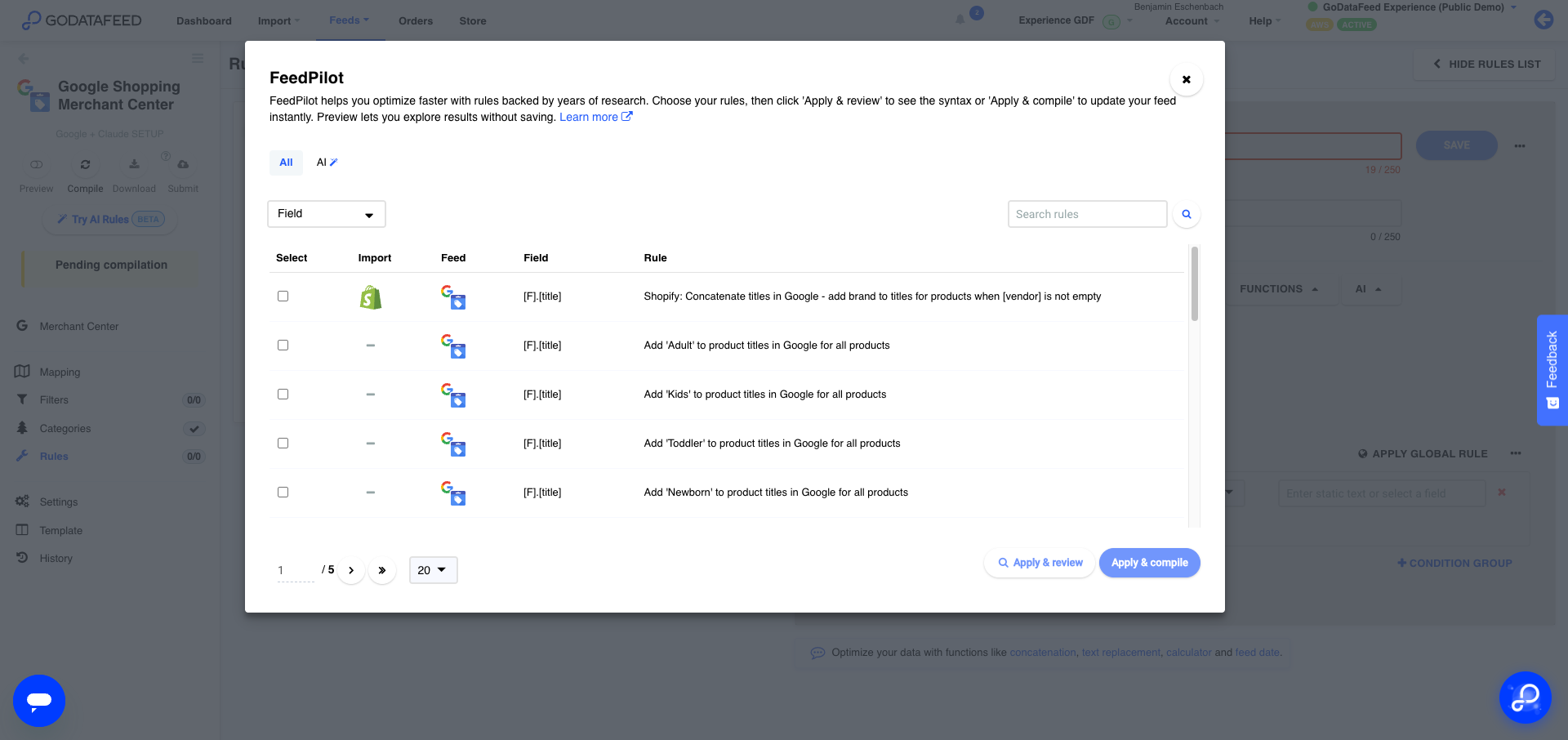
No sales call, no onboarding project. Evan started a 14-day trial, connected Shopify, and rebuilt the Google feed with rules anyone on the team can read.
Sixty days in
Once the transformation was rules instead of spreadsheet patches, clean output became the default state of the catalog rather than the result of someone's Friday. That freed the team to do the thing rules can't: merchandising.
Once one clean, well-attributed catalog existed, every additional channel was a mapping exercise, not a new project.
Titles templated, junk filtered, validation on. Disapprovals under 1% by week six.
Microsoft Merchant Center accepts the Google feed format, and that same feed now powers Copilot shopping surfaces. One afternoon of setup.
Pinterest went live from a channel template, and the existing Meta feed was remapped to the clean catalog. The normalization done for Google paid off twice more.
The two channels Evan had written off as "someday, with an agency" went live with the same two-person team.
Honestly, we didn't get faster at feed work; we mostly stopped doing it. Tuesday mornings I check the health scores and the week's suggestions, and that's the job now.
The feed problems that cost the most money are the ones that never trip an error.
Tallgrass assumed a green Merchant Center meant a healthy feed. Then their best-selling tent sold out during a June heat wave, and return on ad spend across the whole category wobbled for two weeks with no error, no disapproval, and nothing visible to fix.
Performance Max had spent weeks accumulating conversion signal on that tent. When it sold out mid-cycle, the algorithm's strongest signal evaporated without warning, and smart bidding kept feeling around for a product that wasn't coming back until fall. Silent misclassification works the same way: a generic title or a wrong category doesn't get disapproved, it just quietly teaches the algorithm the wrong lesson, and the campaign underperforms with a clean bill of health.
The fix was feed logic, not ad strategy: availability synced frequently enough to matter, back-in-stock dates populated, and seasonal items tagged with custom labels so campaigns could be structured around sell-out risk. Disapprovals turned out to be the cheap, visible tax; the silent problems were the expensive ones.
A disapproval count tells you what Google rejected. A feed health score tells you what's technically fine but underspecified: thin titles, missing attributes, weak categorization. Tallgrass treats the score like a credit score for the catalog, and the Tuesday hour is spent moving it.
AI shopping assistants (ChatGPT, Google AI Mode, Copilot, Perplexity, Rufus) answer shoppers from structured product data first, not from how your website looks. The same attributes Tallgrass cleaned up for Google are what AI assistants read back to shoppers — and Adobe Analytics data reported in June 2026 shows AI-referred retail visits converting 54% better than non-AI traffic.
An agency wanted a monthly retainer to run our feeds. Instead we made the work small enough to keep, and spent the difference on inventory.
Start where Evan started
Connect your store, map your first channel, and let validation catch the junk before Google does. If a two-person team can run six channels in an hour a week, your team can too.
Month-to-month. Published pricing at godatafeed.com/pricing. The platform, workflows, and terms are exactly as described. Prefer it fully run for you? See how a managed migration works.
4.7 on G2 · 5.0 on Capterra · support rated 9.4/10






MORE STORIES