





















































Over 80% of Walmart.com sales happen through the Buy Box. It’s the default offer buyers see when they’re ready to purchase, and the one most of them ever click.
Buy Box eligibility depends on more than price alone. Walmart’s algorithm evaluates your feed for inventory availability, brand consistency, shipping details, and product identifiers.
Many ecommerce teams often scale ad spend on Sponsored Products, only to realize later their listings weren’t Buy Box eligible. One feed issue, such as a mismatched attribute or outdated inventory tag, can cause Walmart to suppress your listing and negatively impact your product visibility.
Which is why understanding how Walmart enforces its latest feed standards is critical. Compliance issues can pull you out of contention before price or shipping even matter.

Walmart’s v5 item spec marks a significant change in how product data is structured and approved. Compared to v4, it introduces more required fields, enforces stricter category mapping, and applies validation checks more aggressively. Feeds that would have passed under v4 last year may now fail under the new rules.
Walmart has enforced the transition to v5, effectively stopping the acceptance of v4 submissions as of August 2025. Sellers who haven’t transitioned risk having products removed from search results. One of the most impactful changes is the addition of the mandatory Country of Origin field, along with updates to item weight, product identifiers, and shipping dimensions. These are mandatory attributes, and leaving them blank will block an item from publishing.
To manage the shift, Walmart recommends using:
Walmart conveys a clear message that v5 is an ongoing process of maintaining compliance with stricter standards, rather than just one-time fixes. Teams that actively review attributes, keep category mapping current, and run status checks avoid the hidden failures that stall sales.
Still, compliance isn’t the whole story. Even with v5 updates in place, the Buy Box algorithm continues to check how your data behaves with each update, making frequent and accurate feed syncs critical.
Walmart’s Buy Box algorithm goes beyond price and fulfillment. It measures how your feed data performs under live selling conditions. The tighter your data, the stronger your eligibility.
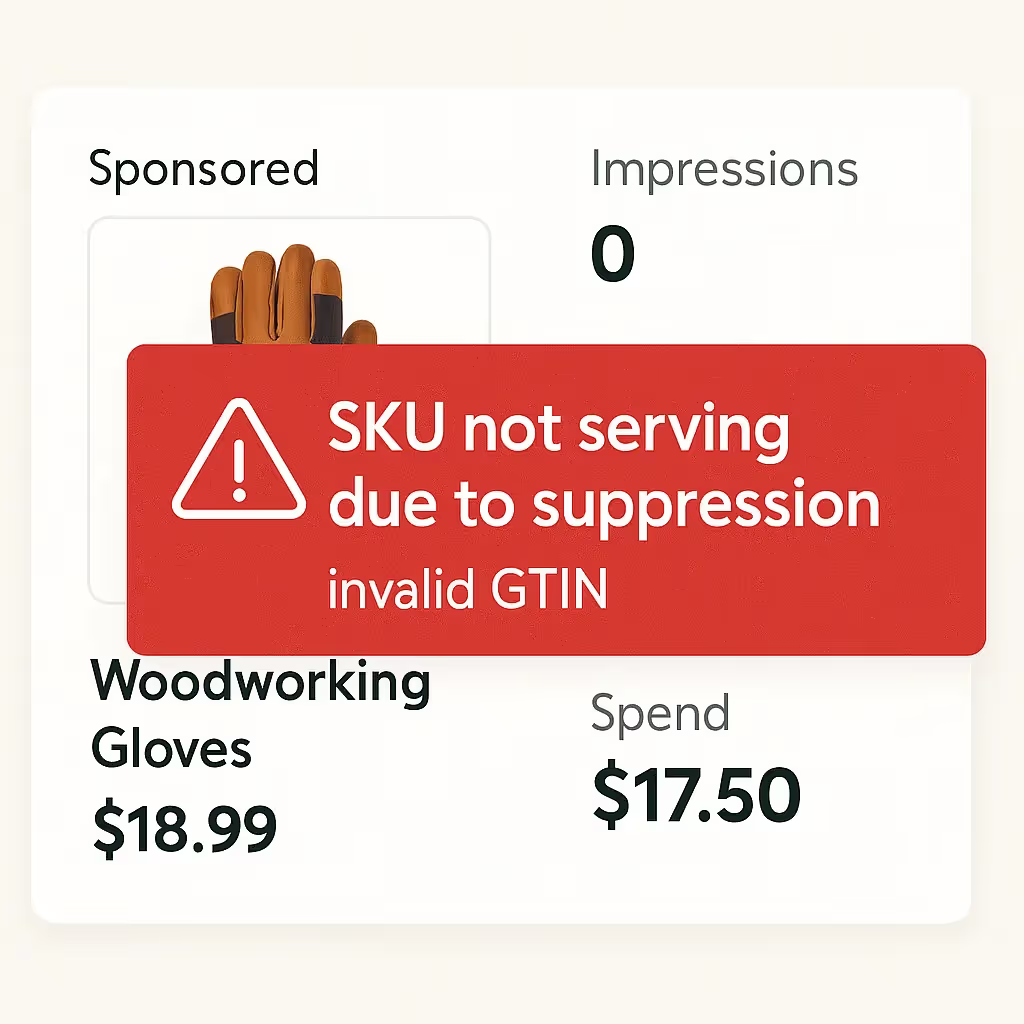
NOTE: In addition, Walmart’s pricing enforcement includes the Competitive Price Rule and Reasonable Price Rule. When your total offer (item + shipping) is materially higher than marketplace benchmarks, the “Add to Cart” button can be removed under the Buy Box Ineligibility rule until pricing becomes competitive. Use Seller Center’s Buy Box/Item reports or the Unpublished dashboard to identify affected SKUs and the reason codes.

Strong feed data is what keeps your offers eligible on a daily basis. The next step is knowing how to fix errors fast and build compliance directly into your workflows.
The fastest way to avoid suppression under Walmart v5 is to fix the data at the source. These are the workflows sellers are using to stay compliant:
Attribute automation. Map all required v5 fields, including the regulatory-mandated Country of Origin, item_weight, and brand automatically. Conditional logic keeps listings from failing when values are missing by pulling data from templates or a verified fallback attribute.
Inventory sync. Set frequent stock updates to match real-time availability. Overstated inventory is one of the fastest ways to get flagged under Walmart’s seller performance standards. Accurate syncs protect Buy Box eligibility and keep ads from driving shoppers to dead SKUs.
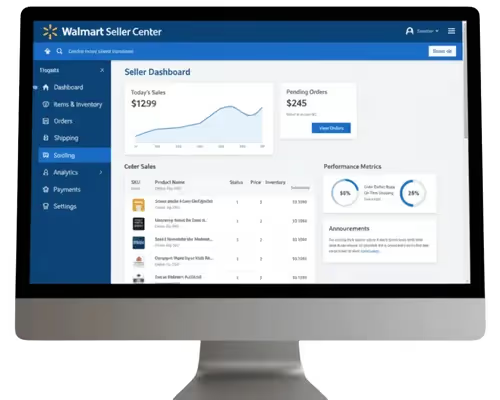
Error monitoring. Don’t wait for suppressed listings to reveal themselves. Walmart’s feed status reports in Seller Center show exactly where data failed. Teams that monitor those reports and correct errors at the attribute level avoid large-scale disruptions.
Title compliance. Walmart has cracked down on non-standard titles (ex: “New 2024” or keyword stuffing). Cleaning titles before submission keeps products from being blocked at upload.
Once those fundamentals are covered, the opportunity shifts from compliance to optimization—fine-tuning feeds in ways that not only prevent errors but also actively improve Buy Box performance.

Compliance keeps your products live. Optimization makes them visible and competitive in Walmart’s most valuable shelf space. Once the basics are established, the real advantage lies in fine-tuning your feeds to surpass eligibility and achieve Buy Box dominance.
Optimizations like these enable sellers to transition from reactive compliance to proactive growth. And once feeds are tuned to win the Buy Box, the next challenge is avoiding the common mistakes that quietly knock even strong listings out of contention.
Silent feed failures cost sellers more Buy Box wins than pricing battles ever do. The problem is they often go unnoticed until sales stall or ad budgets burn without return.
Once those hidden mistakes are eliminated, the real opportunity is in turning feed management from a risk-control task into a revenue-driving advantage.
Feed mastery is the edge. It’s what keeps products visible, campaigns efficient, and revenue growing. On Walmart, the Buy Box follows the sellers who keep their data clean, current, and compliant—every single day.
If you’re unsure how your feed stacks up against Walmart v5, you can easily find out with GoDataFeed.
👉 Book your Walmart Feed Audit and claim our limited-time Walmart launch promo.
We help ecommerce teams audit and optimize feeds so they stay compliant, error-free, and ready to win the Buy Box.
Lin is Director of PR and Communications at GoDataFeed, a multi-channel feed automation and optimization platform that helps thousands of retailers sell more on 60+ ecommerce channels.
Run a free feed audit and see which of your titles are matching queries you'd never choose to bid on.

%20).avif)