








































Social commerce
Your catalog decides the match.
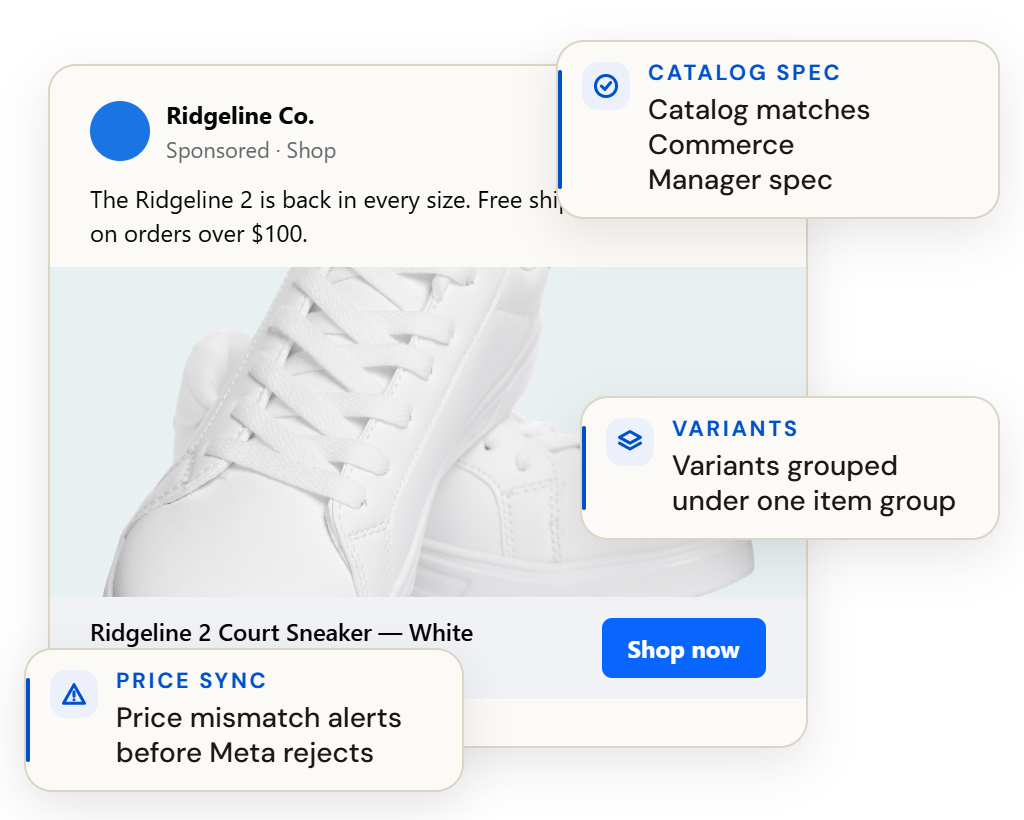
Snapchat's dynamic ads and shopping surfaces read your product catalog, not your website. GoDataFeed rebuilds your data to Snap's spec - complete attributes, clean variants, current prices - so the matching has something to work with.
Why it matters
What it rewards
What it needs from your feed
Thirty minutes, live, on your data — the mapping, the rules, the validations, the fix list. Or watch the demo tour first: the recorded version, no meeting required.
What Snap reads
Snap decides which products to show whom based on the attributes in your catalog. Thin data narrows the matching; complete, accurate data widens it. The creative gets the credit - the catalog does the targeting.
Category, gender, age group, color and material fields populated the way Snap's matching expects.
Item groups keep sizes and colors distinct without fragmenting products across the catalog.
Scheduled updates keep ads from promoting sold-out SKUs or last week's price.
Every SKU is checked against Snap's catalog requirements before it syncs.
How it works
01
Your full catalog imports automatically - products, variants, imagery, inventory.
02
A maintained template covers required fields; your rules tune titles and attributes.
03
Pushes run on schedule with feed health visible in one dashboard.
1
catalog behind Snap, Meta, TikTok and every social surface you sell on.
60+
channels one connection can feed.
0
separate catalogs to maintain per platform.
Questions, answered
What does Snap require in a catalog?
Structured product data with identifiers, imagery, price, availability and category attributes. GoDataFeed formats and validates it on every sync.
Why are my dynamic ads showing the wrong products?
Matching follows the catalog. Missing attributes and broken variant groups skew what the system can pick from - fixing the data fixes the match.
How fresh is price and stock?
As fresh as your schedule. Price and availability can refresh more often than the full catalog.
Go deeper
At a glance
Type
Channel
Connection
Feed format
Refresh
Order sync
No
Plan
Identity key
Before you start
Note
GoDataFeed optimizes, enriches, validates, and keeps your product data in sync across Google, Meta, marketplaces, and AI shopping.