



















































Onsite & martech
as the product data under it.
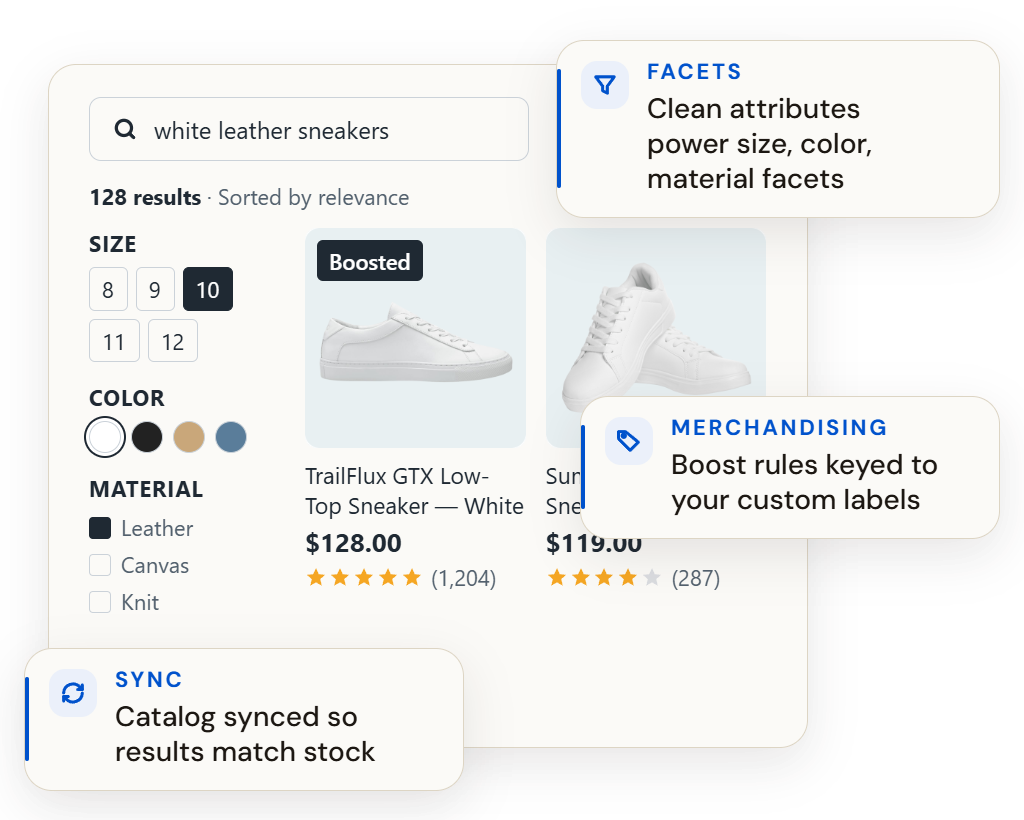
Searchspring indexes your catalog to power search, facets and merchandising. GoDataFeed supplies clean, attribute-complete product data - so results and rankings work from truth, not from gaps.
Why it matters
What it rewards
What it needs from your feed
Thirty minutes, live, on your data — the mapping, the rules, the validations, the fix list. Or watch the demo tour first: the recorded version, no meeting required.
Why attributes decide relevance
Color, size, material, category - onsite search can only facet what the data contains. Thin attributes flatten discovery. Inconsistent values fragment it into filters nobody clicks.
The fields merchandising rules depend on are populated and validated across the catalog.
Rules standardize colors, sizes and categories so filters group cleanly instead of splintering.
Sold-out items drop from results before they disappoint a ready-to-buy shopper.
The catalog behind your channels also powers onsite discovery - no drift between the two.
How it works
01
Your full catalog imports automatically with variants, attributes and inventory.
02
Rules normalize attribute values and fill the gaps merchandising logic depends on.
03
Catalog changes flow to Searchspring automatically, keeping the index current.
1
governed catalog behind search, merchandising and every channel.
60+
channels the same catalog can feed.
0
separate exports for the search index to drift on.
Questions, answered
What data does Searchspring index?
Your product catalog - titles, attributes, categories, imagery, price and availability. GoDataFeed delivers it structured and normalized.
Why do my facets look messy?
Facets mirror the data. Inconsistent attribute values split one filter into five. Normalization rules fix it at the source.
How current is availability?
As current as your schedule - stock changes flow through automatically.
Go deeper
At a glance
Type
Channel
Connection
Feed format
Refresh
Order sync
No
Plan
Identity key
Before you start
Note
GoDataFeed optimizes, enriches, validates, and keeps your product data in sync across Google, Meta, marketplaces, and AI shopping.