



















































Marketplace
built to its spec, not dumped into it.
Rakuten enforces its own categories, attributes and listing structure. GoDataFeed rebuilds your catalog to that spec, validates every SKU and keeps price and inventory current.
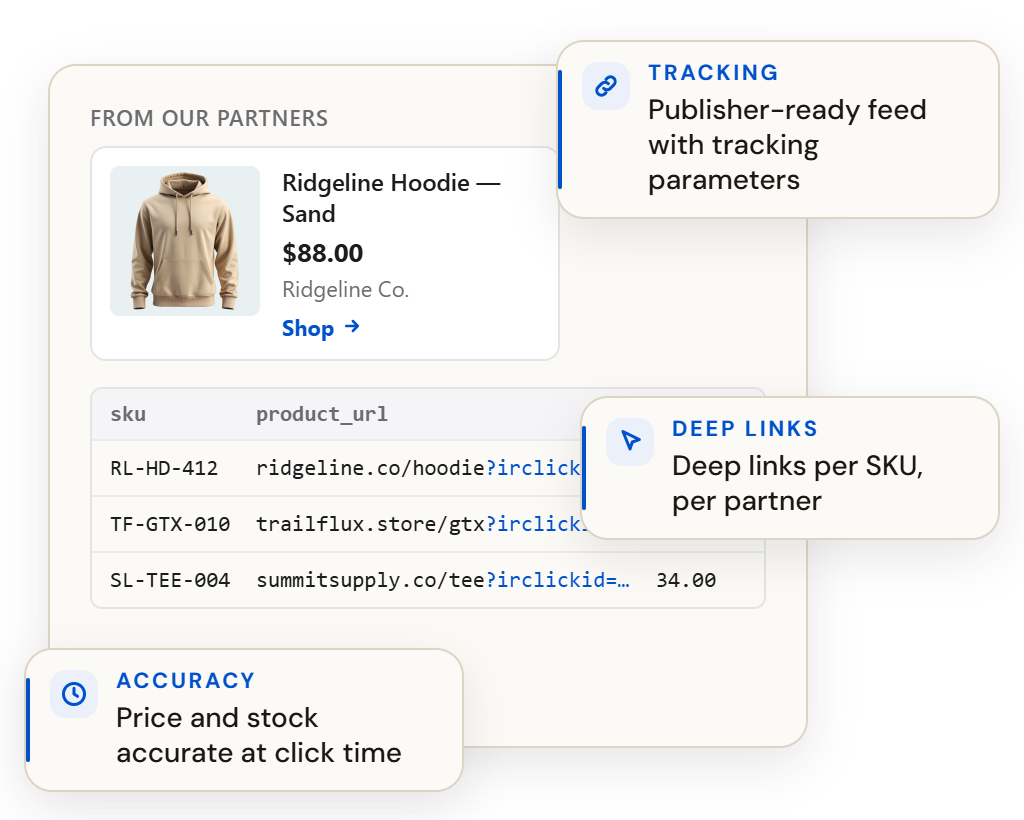
Why it matters
What it rewards
What it needs from your feed
Thirty minutes, live, on your data — the mapping, the rules, the validations, the fix list. Or watch the demo tour first: the recorded version, no meeting required.
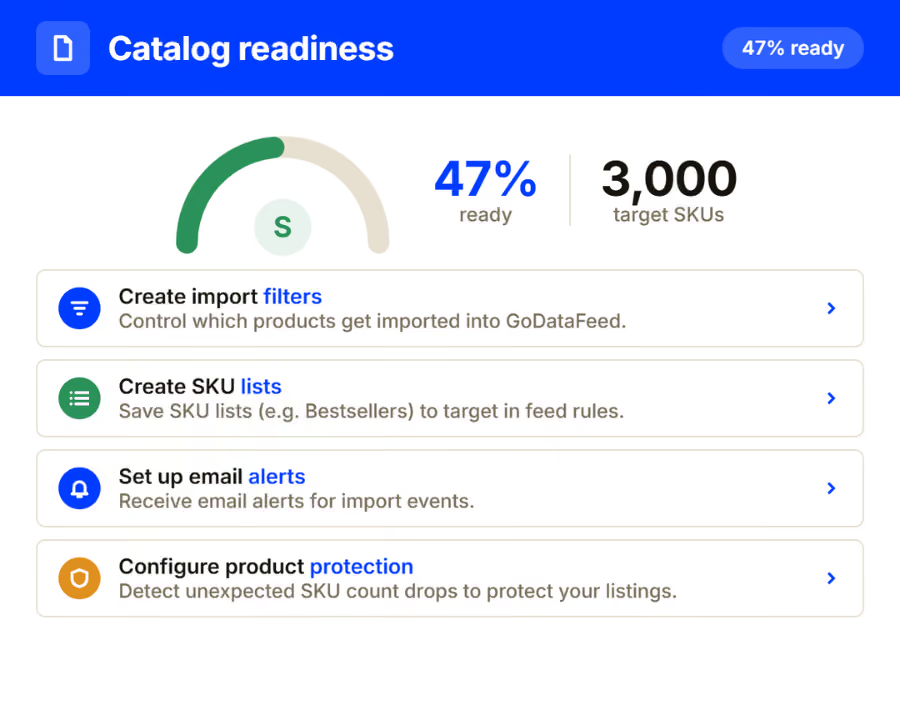
Why listings stall
A marketplace lists what its spec can parse. Storefront titles, loose categories and unstructured variants read fine on your site and fail on ingestion - and a failed listing earns nothing.
Your product types map to Rakuten's taxonomy with rules, not one-by-one edits.
Required fields are populated per category and validated before submission.
Sizes and colors group the way the marketplace expects, so families list cleanly.
Scheduled updates protect against overselling and stale-price takedowns.
How it works
01
Your full catalog imports automatically with variants, imagery and inventory.
02
A maintained template handles taxonomy and required attributes; your rules refine them.
03
Validated listings push on schedule, with price and stock refreshing between syncs.
1
catalog behind Rakuten and every other marketplace you sell.
60+
channels one connection can feed.
0
listings rejected for fields a rule could have filled.
Questions, answered
What blocks listings most often?
Taxonomy mismatches, missing required attributes and malformed variants. Pre-push validation catches all three.
How does inventory stay accurate?
Stock and price sync on your schedule, so Rakuten tracks what your store can actually fulfill.
Can I manage Rakuten alongside Amazon and Walmart?
Yes - one governed catalog feeds each marketplace in its own required format.
Go deeper
At a glance
Type
Channel
Connection
Feed format
Refresh
Order sync
No
Plan
Identity key
Before you start
Note
GoDataFeed optimizes, enriches, validates, and keeps your product data in sync across Google, Meta, marketplaces, and AI shopping.