




















































Advertising
Your product data earns the click.
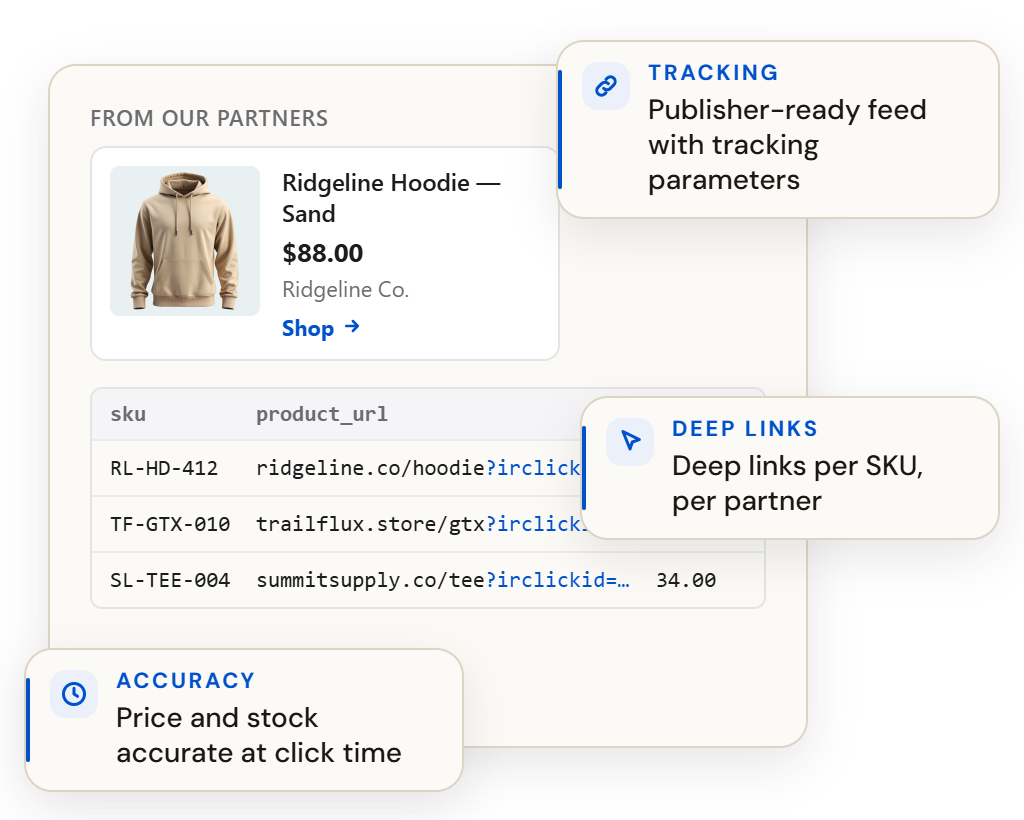
Outbrain renders product placements from the data you supply. GoDataFeed formats your catalog to spec and keeps titles, imagery, price and availability current - so native placements sell instead of just appearing.
Why it matters
What it rewards
What it needs from your feed
Thirty minutes, live, on your data — the mapping, the rules, the validations, the fix list. Or watch the demo tour first: the recorded version, no meeting required.
What the placement pulls
On discovery surfaces the product card is the pitch: image, title, price. Each renders from your data at serve time. Weak fields do not lower quality score - they are the ad.
Titles, images, categories and links formatted to the platform's product spec.
Scheduled updates keep rendered placements aligned with your store.
Formats validated and URLs verified before push, so cards render clean and clicks land.
The catalog behind your shopping channels extends to Outbrain without a parallel pipeline.
How it works
01
Products, variants, pricing and inventory import automatically.
02
A maintained template handles required fields; rules handle your exceptions.
03
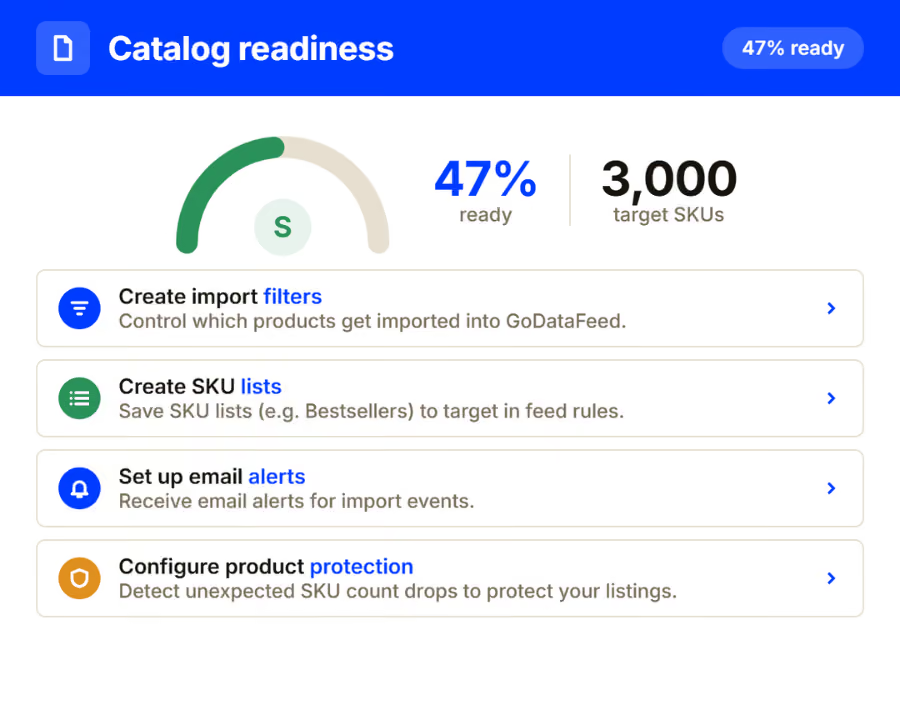
Pushes run automatically with feed health visible in one dashboard.
1
catalog behind every network that renders your products.
60+
channels one connection can feed.
0
hand-built files per ad platform.
Questions, answered
What data does Outbrain use?
Product titles, images, prices, availability and links from your catalog - formatted to spec and validated before push.
How current is the data?
As current as your schedule, with price and stock refreshing more often than the full catalog when needed.
Do I need a dedicated feed?
No. One governed catalog outputs a spec-correct version for Outbrain alongside your other channels.
Go deeper
At a glance
Type
Channel
Connection
Feed format
Refresh
Order sync
No
Plan
Identity key
Before you start
Note
GoDataFeed optimizes, enriches, validates, and keeps your product data in sync across Google, Meta, marketplaces, and AI shopping.