




















































Shopping engine
Your data decides if they find you.
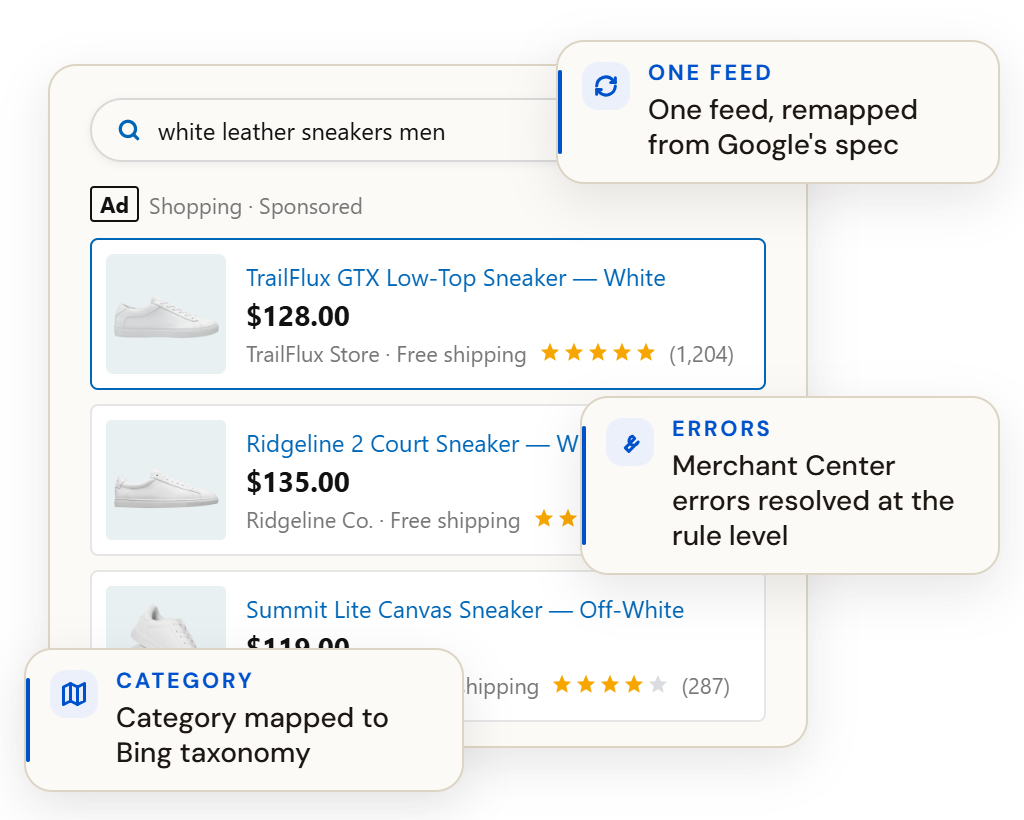
Bing's shopping results read your Microsoft Merchant Center feed. GoDataFeed builds it to Microsoft's spec from the same catalog behind your Google presence - validated, complete and current.
Why it matters
What it rewards
What it needs from your feed
The overlooked auction
Microsoft enforces its own spec, taxonomy and identifiers. Merchants who assume their Google file will just work find out at ingestion - or worse, in quiet underperformance nobody investigates.
Fields and formats built to Microsoft Merchant Center requirements, not recycled from Google.
GTINs and MPNs validated so products match Bing's shopping results correctly.
The fields Bing's matching reads, populated by rule across the catalog.
Scheduled updates keep listings aligned with what your store charges and can sell.
How it works
01
Your catalog imports automatically with variants, pricing and inventory.
02
A maintained template covers Merchant Center requirements; your rules refine the details.
03
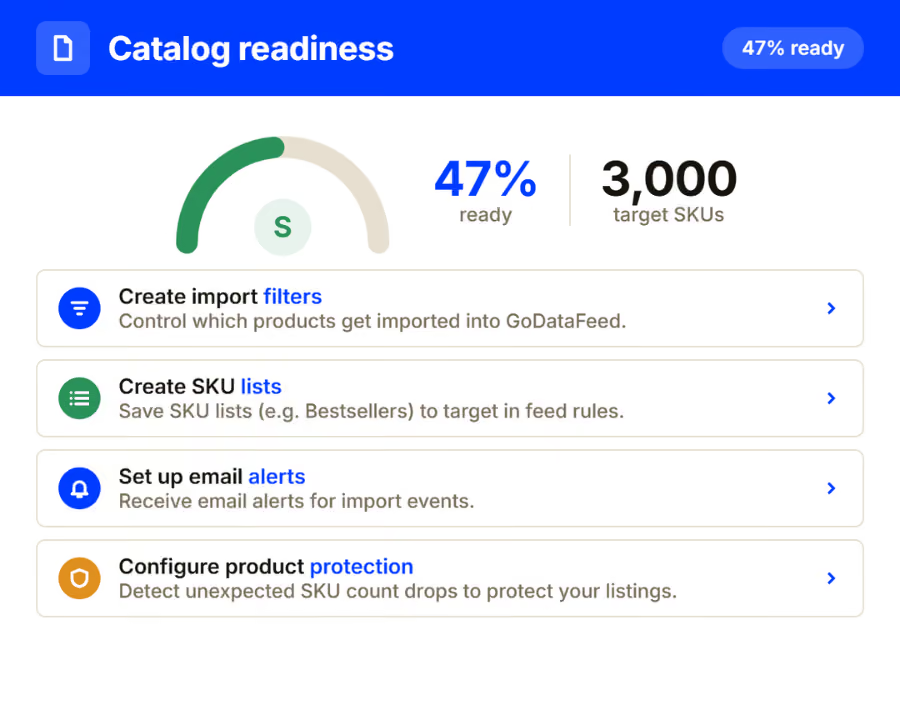
Validated pushes run on schedule with feed health tracked in one dashboard.
Thirty minutes, live, on your data — the mapping, the rules, the validations, the fix list. Or watch the demo tour first: the recorded version, no meeting required.
1
catalog behind Bing, Google and every engine you list on.
60+
channels one connection can feed.
0
assumptions that a Google file passes Microsoft ingestion.
Questions, answered
Can I reuse my Google feed?
You reuse the catalog, not the file. Microsoft's spec differs in fields and formats - GoDataFeed outputs a version built for it.
What blocks Bing listings?
Missing identifiers, malformed fields and taxonomy mismatches. Pre-push validation catches them before ingestion does.
How current is price and stock?
As current as your schedule - both can refresh more often than the full catalog.
Go deeper
At a glance
Type
Channel
Connection
Feed format
Refresh
Order sync
No
Plan
Identity key
Before you start
Note
GoDataFeed optimizes, enriches, validates, and keeps your product data in sync across Google, Meta, marketplaces, and AI shopping.