




















































Marketplace
dimensions and materials do the selling.
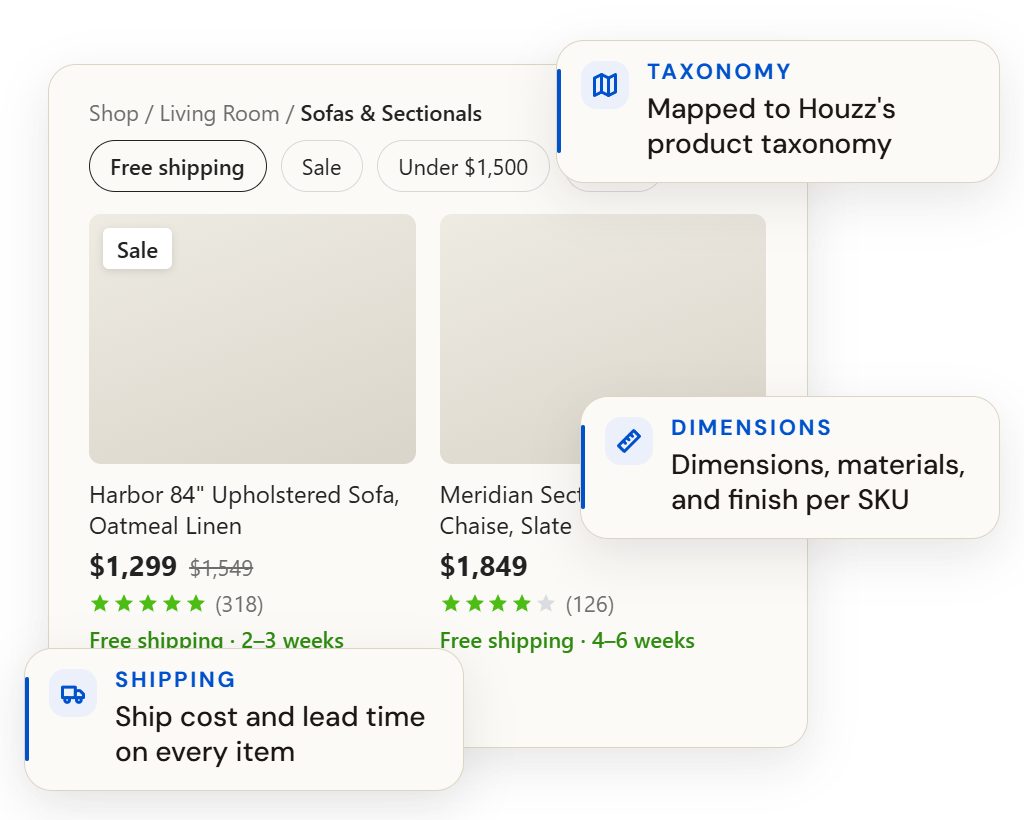
Houzz shoppers filter by size, material, style and room. GoDataFeed maps your catalog to Houzz's category attributes and keeps listings current - so your products surface where furnishing decisions get made.
Why attributes surface products
A sofa without dimensions or a fixture without a finish does not rank poorly on Houzz - it disappears from the filters shoppers actually use. Category attributes are the merchandising.
Dimensions, materials, finishes and styles populated per Houzz category with rules.
Image rules enforce the formats and quality the marketplace expects.
Finishes and sizes group cleanly, so families list as options instead of duplicates.
Scheduled updates protect against overselling and stale-price takedowns.
How it works
01
Your full catalog imports automatically with attributes, imagery and inventory.
02
A maintained template covers taxonomy and required attributes; your rules fill the gaps.
03
Validated listings push on schedule with feed health in one dashboard.
Thirty minutes, live, on your data — the mapping, the rules, the validations, the fix list. Or watch the demo tour first: the recorded version, no meeting required.
1
catalog behind Houzz and every other marketplace you sell.
60+
channels one connection can feed.
0
products invisible to the filters shoppers use.
Questions, answered
What data does Houzz emphasize?
Category attributes - dimensions, materials, finishes, styles - plus compliant imagery. Rules populate them across the catalog.
How do variants list?
Grouped as options within one listing, so a finish or size choice does not fragment into duplicates.
How does inventory stay accurate?
Stock and price sync on your schedule, tracking what your store can fulfill.
Go deeper
At a glance
Type
Channel
Connection
Feed format
Refresh
Order sync
No
Plan
Identity key
Before you start
Note
GoDataFeed optimizes, enriches, validates, and keeps your product data in sync across Google, Meta, marketplaces, and AI shopping.