

















































Advertising
your product data is the targeting.
Performance Max and AI Max decide what to match and how to bid from the catalog in Merchant Center. GoDataFeed engineers that data - titles, attributes, custom labels - so the algorithm executes your strategy instead of its best guess.
The last lever
Keywords, match types and manual bids are gone. What the algorithm reads now is your title structure, attribute coverage and custom labels - and most teams are diagnosing weak data as a bidding problem.
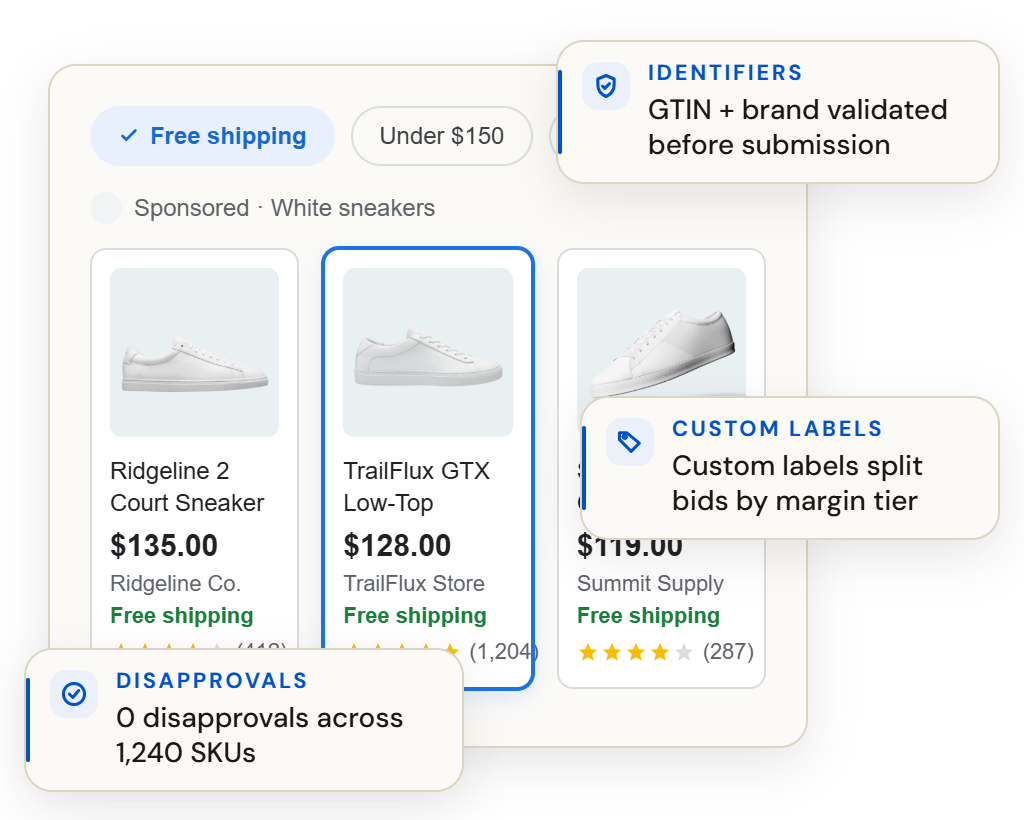
Brand, category and variant attributes built into titles, so products match the long-tail queries that convert.
Margin bands, seasonality and inventory priority encoded into the five custom_label slots P-Max reads.
Every SKU checked against Google’s spec before submission - resolve issues, not disapprovals.
item_group_id structure keeps size and color variants from colliding in the auction.
How it works
01
Your catalog imports automatically with variants, pricing and inventory.
02
Rules build titles, attributes and custom labels that encode your commercial priorities.
03
Validated pushes run on schedule; approvals and errors are tracked in one dashboard.
Thirty minutes, live, on your data — the mapping, the rules, the validations, the fix list. Or watch the demo tour first: the recorded version, no meeting required.
5
custom label slots - the only levers P-Max gives you for business strategy.
1
catalog behind Shopping, P-Max, AI Max and remarketing.
0
keywords left to target with - the data does that job now.
Questions, answered
Does AI Max replace feed work?
AI Max matches from the signals in your catalog. Complete, structured data widens what it can match and bid on - thin data narrows it. The AI reads what you give it.
What are custom labels actually for?
They are how you tell P-Max which products deserve aggressive bidding and which do not - margin tiers, clearance flags, seasonal priorities, encoded in the data.
Will this reduce disapprovals?
Most disapprovals trace back to data. Validation catches spec violations before submission, and a single rule change fixes affected SKUs at once.
Go deeper
At a glance
Type
Channel
Connection
Feed format
Refresh
Order sync
No
Plan
Identity key
Before you start
Note
GoDataFeed optimizes, enriches, validates, and keeps your product data in sync across Google, Meta, marketplaces, and AI shopping.