


















































Shopping engine
where comparisons happen.
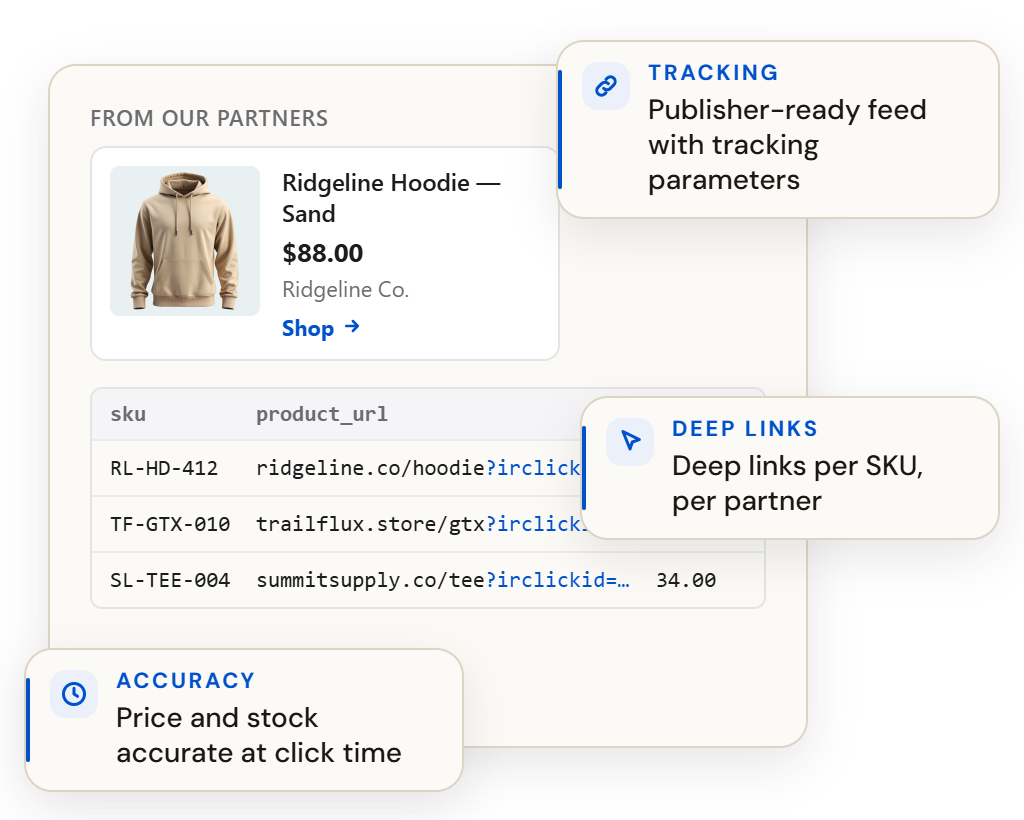
Connexity distributes your offers across its network of shopping publishers. GoDataFeed maps your catalog to its spec and keeps price and availability current, so every placement reflects your store.
Why it matters
What it rewards
What it needs from your feed
Thirty minutes, live, on your data — the mapping, the rules, the validations, the fix list. Or watch the demo tour first: the recorded version, no meeting required.
Why data carries the network
Your offers appear across the network's publisher sites, assembled from the file you submit. Accurate data compounds across placements. Stale data compounds too - in wasted clicks.
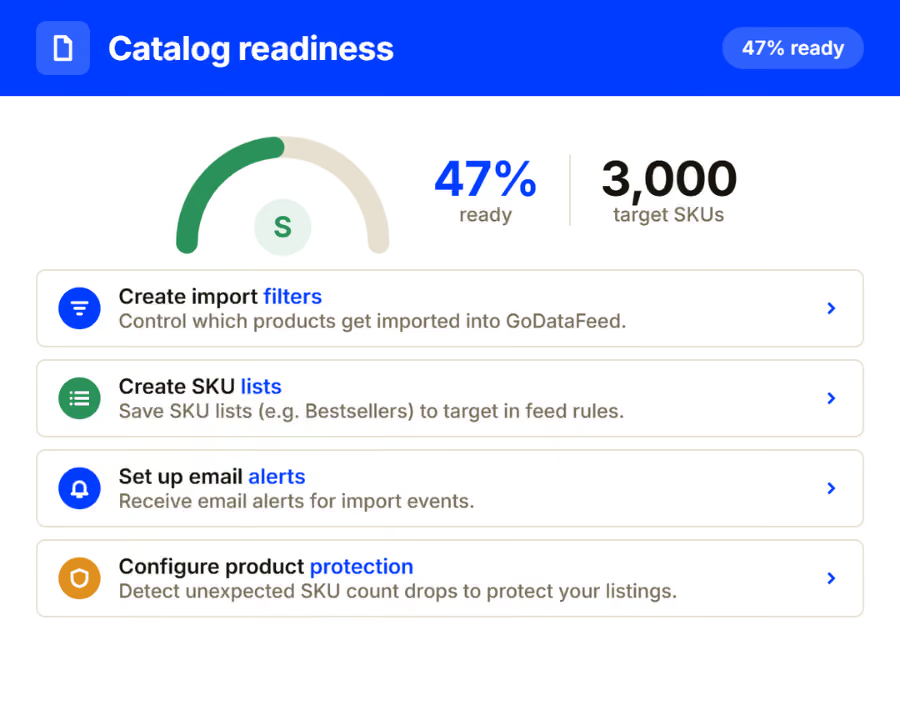
Categories, attributes and imagery formatted to Connexity's requirements on every sync.
Scheduled updates keep listed prices aligned with your checkout across the network.
Out-of-stock SKUs drop from circulation before they burn paid clicks.
The same validated data behind Google Shopping covers Connexity without a side pipeline.
How it works
01
Your catalog imports automatically with pricing, inventory and imagery.
02
A maintained template handles the format; your rules handle categories and exceptions.
03
Offers refresh automatically across the network without manual exports.
1
catalog behind every comparison network you list on.
60+
channels one connection can feed.
0
paid clicks on offers your store cannot honor.
Questions, answered
What does Connexity ingest?
Structured offers with category, price, availability, imagery and working URLs - validated against the spec before push.
How current is pricing across the network?
As current as your schedule. Price and stock can refresh more often than the full catalog.
Is this separate from my other comparison feeds?
Same catalog, different output - each network gets its own spec-correct format.
Go deeper
At a glance
Type
Channel
Connection
Feed format
Refresh
Order sync
No
Plan
Identity key
Before you start
Note
GoDataFeed optimizes, enriches, validates, and keeps your product data in sync across Google, Meta, marketplaces, and AI shopping.