





















































If your Shopping or Performance Max campaigns feel like they’re missing opportunities, the key to unlocking their full potential lies in your product attributes. These aren’t just the required fields—they’re the attributes that tell platforms how to strategically use your products. Your feed isn’t broken; it’s simply under-leveraged, and a few key enhancements can make all the difference.
The data’s there. Catalog’s clean. Everything’s approved in Merchant Center. But your campaigns? Low ROAS, inconsistent visibility, asset groups blending SKUs that shouldn’t be together.
What breaks isn’t the feed. It’s the platform logic that kicks in when you don’t define a logic of your own.
If you’re not using product_type to shape segmentation, or custom_label to separate your high-margin winners, Google’s going to make decisions for you. And they won’t match your strategy.
Let’s say you’re running Performance Max with a couple of hundred SKUs. No custom labels. Flat product_type. GTIN coverage looks okay.
But:
So now you’re stuck with blended performance data and no way to adjust bids, creative, or segmentation. And Google? It’s using whatever it can to cluster your catalog—often by accident.
This is how strategy slips away.
GTINs are a powerful lever for visibility. When they're accurate, they ensure your products are eligible for premium placements. Without them, your products may be limited to generic placements, which can result in lower impressions and higher CPCs as they are at a disadvantage next to better-structured listings. While these issues might not be flagged as a hard error in diagnostics, addressing them is a simple way to boost performance.
[For a step-by-step breakdown of GTINs and other identifiers, see GoDataFeed’s Product Identifier Tutorial.]
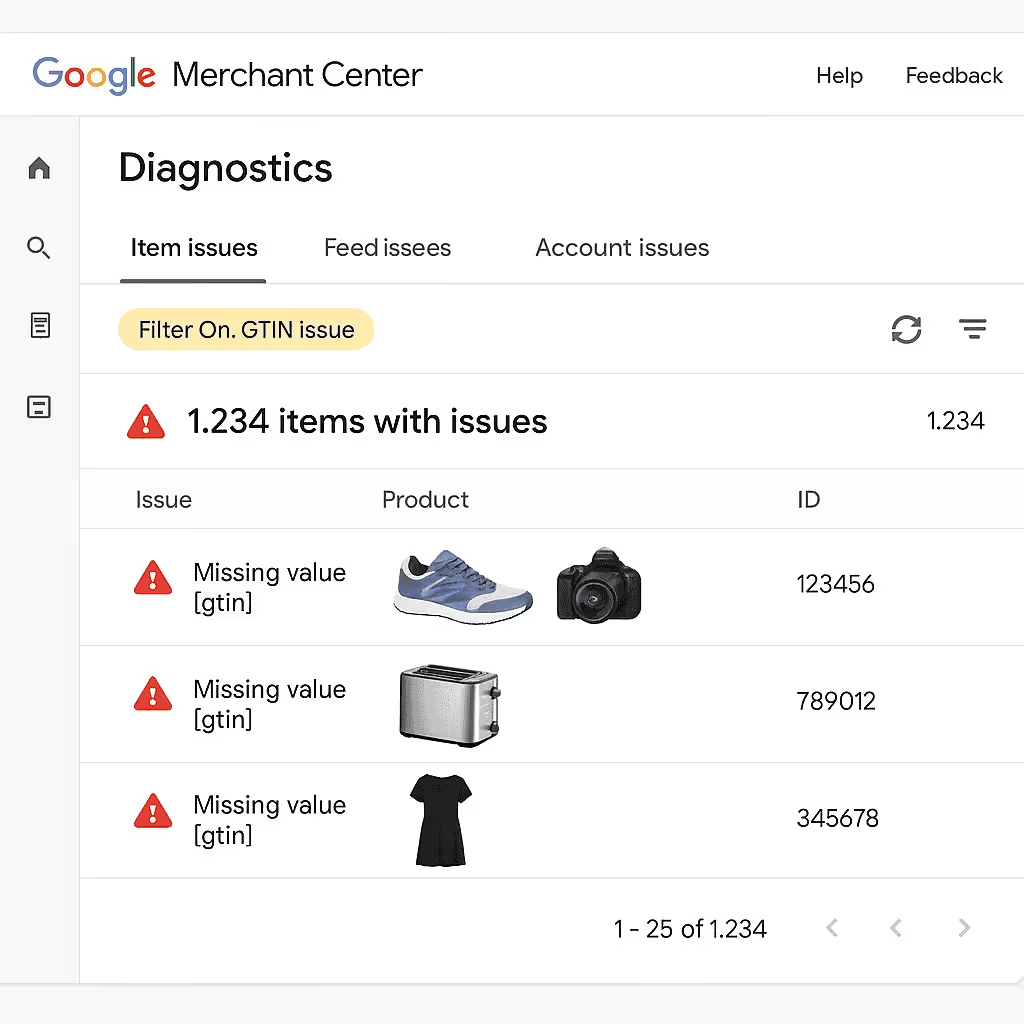
What to do:
This catches the quiet killers—the ones that aren’t broken, just invisible.
These attributes don’t just help Google organize your products. They shape campaign behavior.

Here’s what they should do:

When you strategically fill these fields, your campaigns get a clear roadmap. You're no longer leaving your product organization to platform algorithms; you're actively directing your products to the right audience and ad placements.
Use case: seasonal segmentation
You’re pushing back-to-school products in August. You’ve got “school,” “college,” and “dorm” keywords in the title and description—but unless Google sees a specific label, it can’t group them.
Do this instead:

Now you’re not just listed—you’re directing traffic.
[Want more examples? GoDataFeed’s Custom Labels Guide shows how retailers use margin tiers, seasonality, and promo flags to drive segmentation.]
Let’s go channel by channel:
Google Shopping
Meta Commerce

Amazon & Walmart
The throughline? Clean attributes = control. Messy attributes = missed visibility.
You don’t need to fix everything at once. Start here:

[If you’re unsure where to begin, GoDataFeed explains Why Product Identifiers Matter for feed health and campaign eligibility.]
Pro tip: Use GoDataFeed to create dynamic rules. Tag high-margin items automatically. Flag seasonal inventory based on keywords. Exclude products with <3 units left from being promoted.
You don’t need a full audit every week. But don’t let it go cold either.

The goal isn’t just feed hygiene. It’s feed direction. The cleaner your attributes, the smarter your campaigns run.
The goal of feed management is to move beyond simply clearing errors and toward active optimization. By enhancing your product attributes, you're not just providing data—you're providing strategic signals that unlock better performance. Platform logic is built to help you—but only if you give it the right signals.
GTINs tell Google what your product is.
product_type tells it where that product fits.
custom_labels tell it how you want to treat it.
Get those right, and your campaigns stop drifting. They start executing.
Jumpstart your ecommerce optimization strategy by requesting a complimentary product feed audit today.
Carlos Rodriguez is a seasoned content marketer with a background in marketing and advertising. Formerly at the helm of his own marketing agency, he now dedicates his expertise to guiding ecommerce merchants and marketers in mastering multichannel strategies. Outside of work, Carlos is an avid reader and hiker, often found traversing the mountain ranges of Cundinamarca like El Quinini.
Run a free feed audit and see which of your titles are matching queries you'd never choose to bid on.

%20).avif)