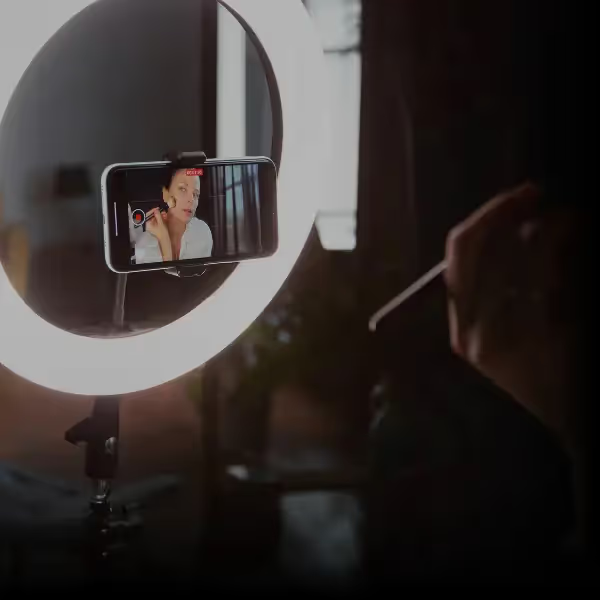




















































Google's AI isn't just suggesting videos in SERPs — it's actively mining them for product information. In fact, YouTube citations in search have surged 25% since January — marking video content's transformation from optional asset to structural necessity in retail search strategy.
But let’s get this straight: This isn't about YouTube as a marketing channel.
This is about YouTube as a critical source of product information that Google's AI increasingly prefers over traditional product pages.
Even though Google’s lawyer said less than 1% of YouTube video views come from search, Google continues to give preference to videos from its YouTube platform – especially for visual demonstrations, step-by-step tutorials, and product comparisons. If you want to be visible in AI Overviews, you may want to align your YouTube and SEO strategies so your videos are cited in AI Overviews. - Danny Goodwin
The shift is already visible:
For retailers, this creates an uncomfortable reality: your carefully optimized product pages are now competing with video content for SERPs.
Let's look at the hard numbers that prove this isn't speculation.
Raw data tells the story better than any marketing spin could: ecommerce content dominates YouTube citations in Google's AI Overviews. When Google's AI pulls video content into search results, it's pulling product information more than any other category — and the gap is widening.
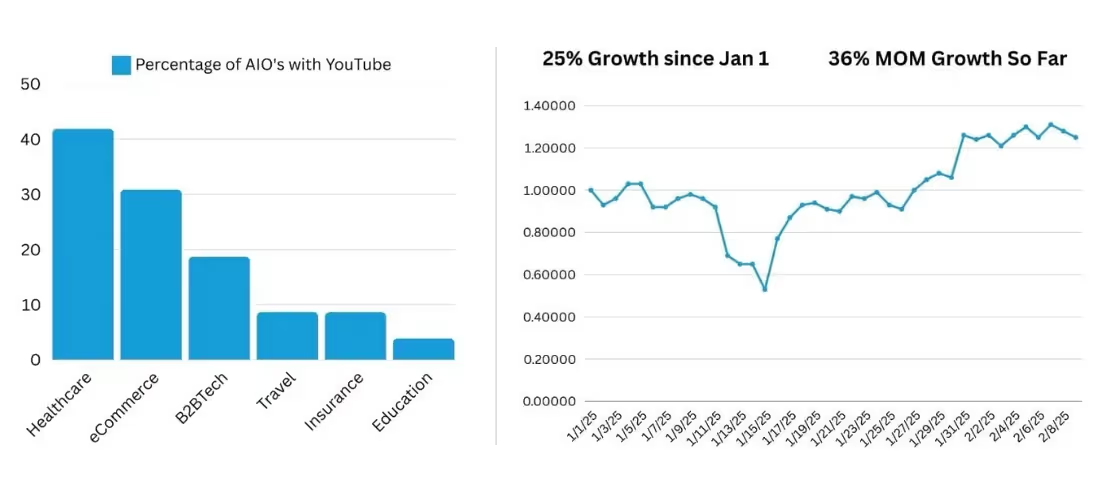
Percentage of AI Overviews Citing YouTube:
Google's AI has figured out what customers already know — product pages tell you about a product, but videos show you what it's actually like to own it. This creates an inherent advantage for video content in retail search:
When we quantify this advantage, the numbers are stark:
But here's what makes this particularly critical for retail: Google's AI isn't just suggesting videos — it's actively extracting and highlighting product information from them. Your product content is either in this ecosystem, or it's increasingly invisible to the AI that matters most.
Google's AI doesn't watch videos like humans do. It dissects them. Every frame, caption, and spoken word becomes searchable data — and for product content, this creates both opportunities and blindspots that most retailers don't understand.

This process reveals why some product videos dominate search while others disappear into the void.
Why Text-Only SEO Falls Short
Traditional product pages can't compete with video in key areas:

The data on video effectiveness is compelling:
But all this data about video effectiveness means nothing for SEO if Google's AI can't parse your content. But here's the thing: most retailers approach YouTube optimization backwards — focusing on surface metrics while missing the structural elements that actually influence AI Overview placement.
So how do you actually create content that Google's AI wants to surface?

Let's start with the foundation: finding the right keywords for video content that Google's AI prioritizes.
Forget everything you know about traditional keyword research. When Google's AI evaluates video content for search results, it's looking for specific patterns that most keyword tools don't track
High-Impact Keywords for AI Overview Placement:
Here's what makes these patterns different: They signal clear search intent that video content can uniquely satisfy. Google's AI has learned that users searching with these patterns are more likely to engage with video results.
Tools like vidIQ and TubeBuddy are useful, but they're built for YouTube's algorithm, not Google's AI Overviews. The real opportunity lies in identifying queries where:
The key is analyzing your existing search traffic for patterns where users bounce from text content but engage deeply with video. These are your prime targets for AI Overview optimization.

Most product videos fail in search because they're built for humans only. Yes, user engagement matters — but Google's AI needs clear markers to understand and surface your content. Here's how to serve both masters:
AI is learning to understand video content like a human would. It's not just reading metadata — it's analyzing the relationship between what's being shown, said, and written on screen. The key here is to make these connections crystal clear.
.avif)
Stop thinking about traditional YouTube SEO for a minute. When Google's AI scans your video content, it needs specific technical elements to properly index and categorize your product information. Here's what actually matters:
These technical elements serve as translation layers between your video content and AI. Missing any of these doesn't just hurt your visibility — it makes parts of your content invisible to AI interpretation entirely.
But one optimized video isn't enough. Here's how to build a complete video presence that commands AI attention.
.avif)
One viral product video won't cut it. Google's AI looks for consistent patterns of authority — and that means building a YouTube presence with structure and purpose. Here's what actually drives AI recognition:
Topic Clusters That Matter:

The Authority Indicators AI Watches:
Think of your YouTube channel as a product knowledge base that happens to be in video form. Every piece of content should strengthen your authority in specific product categories.
Strategic Collaborations That Work:
Skip the standard "like and subscribe" tactics. Focus instead on building content structures that demonstrate deep product expertise to both users and AI systems.
The data is clear: Google's AI has made YouTube a major player in search results. The sudden increase in YouTube citations isn't just a trend — it's a fundamental shift in how products get discovered. For retailers, this means video content has moved from "nice to have" to "necessary for survival."
The Strategic Impact: Traditional SEO strategies are hitting their limits. Text-only content struggles to compete when Google's AI can extract detailed product information from video. This isn't about adding another marketing channel — it's about adapting to how search actually works now.
What This Means for Your Search Strategy:
The Reality Check: Most retailers are approaching this backwards — treating YouTube as a brand channel instead of a critical SEO asset. The opportunity lies in understanding that Google's AI doesn't care about your production budget. It cares about extracting valuable product information that matches user intent.
The Path Forward: Start with what you have. Your existing product expertise is more valuable than perfect lighting or polished scripts. Focus on creating content that answers real customer questions and showcases actual product features. The goal isn't to win awards — it's to show up when your customers are searching.
Your competitors are facing the same challenges. The difference will be in who adapts first and who waits until they have no choice.
Bryan is a digital marketer with roots in journalism and creative writing. Over the past decade, he's helped hundreds of online retailers develop and implement ecommerce marketing strategies. When he isn't educating retailers on ecommerce, he's out exploring South Florida and stalking local breweries.
Run a free feed audit and see which of your titles are matching queries you'd never choose to bid on.