





















































Meta Ads have become a powerhouse for ecommerce brands, offering precise targeting, scalable ad campaigns, and a direct path to conversion. With over 2.8 billion monthly active users on Facebook and more than 1 billion on Instagram, Meta’s advertising ecosystem provides unmatched opportunities for ecommerce brands to reach their ideal customers.
However, many advertisers fall into a common trap: when their campaigns underperform, they increase their ad spend instead of optimizing their strategy. This approach leads to wasted budgets and diminishing returns. The key to success isn’t spending more—it’s spending smarter.
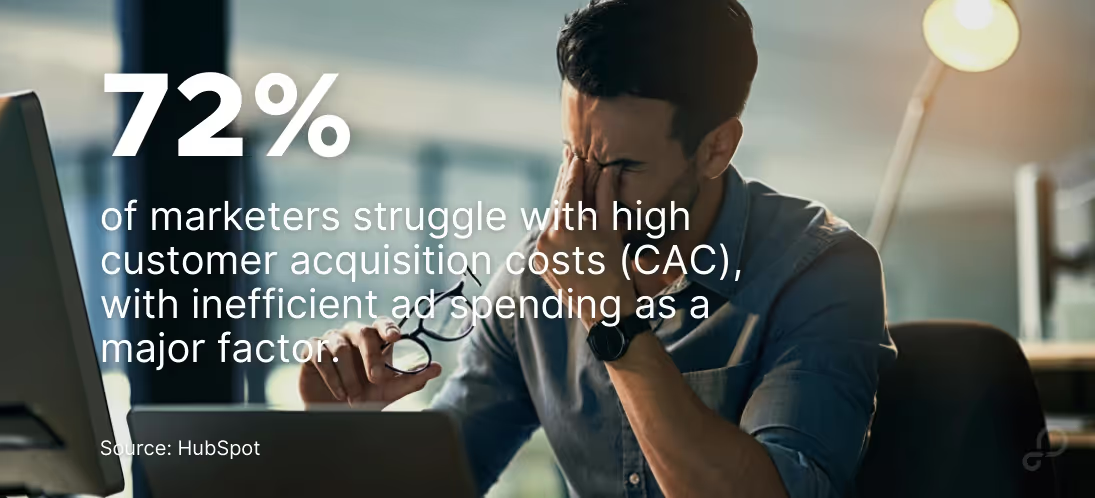
A recent study by HubSpot found that 72% of marketers struggle with high customer acquisition costs (CAC), and a significant portion of that cost comes from inefficient ad spending.
According to Meta’s own internal data, advertisers who optimize their audience targeting, creative formats, and bidding strategies can achieve up to a 35%–80% improvement in campaign effectiveness compared to those who rely solely on increased ad spend.
Pro Tip: Meta Ads success isn’t about how much you spend—it’s about how well you optimize.
This guide is not about throwing more money at ads. Instead, it provides a step-by-step checklist of proven strategies that will help ecommerce advertisers:
Meta Ads offer incredible potential for ecommerce brands, but success doesn’t come from spending more—it comes from refining and optimizing every aspect of your campaigns. In the sections ahead, we’ll break down the proven strategies you need to boost performance, lower costs, and increase sales—without increasing your budget.
The smartest advertisers don’t spend more—they make every dollar work harder. These proven strategies will show you how.
Before you start tweaking and optimizing, you need a solid foundation. Without the right structure, tracking, and goals, even the best ad strategies won’t get you far.
Here’s what you need to do before you launch:
Messy campaign setups lead to wasted budget and confusing data. Keep things clean and structured so you know what’s working and what’s not.
Best practices for setting up campaigns:
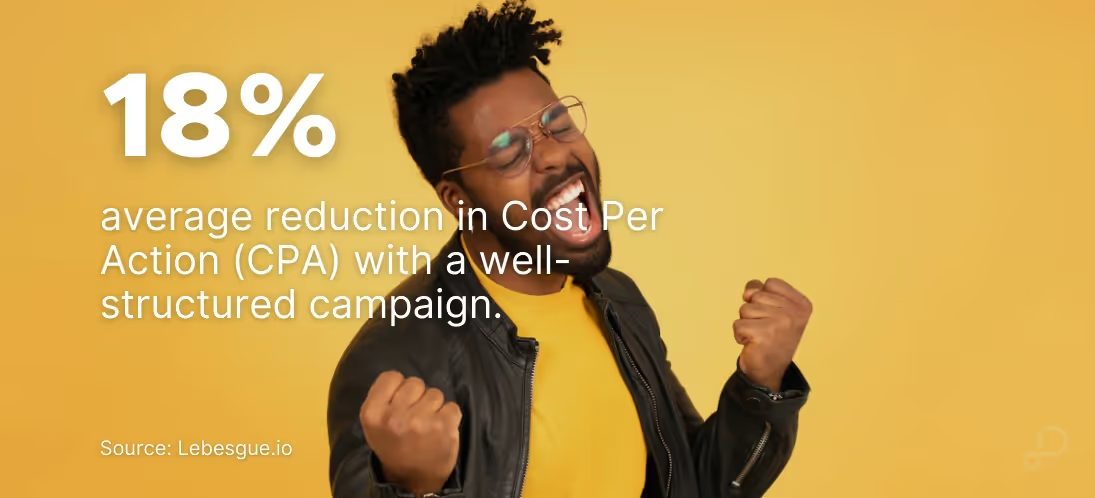
Studies show that a well-structured campaign can reduce Cost Per Action (CPA) by an average of 18%. (Lebesgue.io)
Without proper tracking, you’re guessing. Meta Pixel and Conversion API (CAPI) help track customer actions, optimize ad delivery, and improve reporting.
🔗 How to Optimize Your Product Feed for Facebook & Instagram Ads
What you need to check:
Brands that combine Meta Pixel and Conversion API see a 19% boost in conversions. (Meta for Developers)
%20(meaning)%20(Proven%20Strategies%20to%20Optimize%20Your%20Meta).avif)
Before running ads, check out what your competitors are doing. You don’t need to copy them, but seeing their ads can spark ideas and show you what’s getting engagement.
How to research competitors:
Many advertisers analyze competitor ads to refine their own creative strategies. The Meta Ad Library makes it easy to see what’s working for others. (Meta Ad Library)
If you don’t know what success looks like, you won’t know if your ads are working. Set clear goals so you can track results and make adjustments.
Common Meta Ads goals:
Advertisers who clearly define their objectives and optimize around key performance indicators are more likely to see improvements in ROAS. (Shopify)
Your ads will only perform as well as the foundation they’re built on. Before you optimize, make sure your campaign structure is clean, tracking is reliable, competitors are analyzed, and goals are set.
Once that’s in place, you’re ready to start optimizing with proven strategies to lower costs and drive more sales.
Next up: How to fine-tune your targeting, creative, bidding, and scaling to get better results.
Now that your foundation is solid, it’s time to fine-tune your approach. Many ecommerce advertisers assume that scaling up means spending more, but real success comes from optimizing every aspect of your campaigns—from targeting to creative to bidding. These techniques will help you improve performance, increase efficiency, and drive more sales without overspending.
Reaching the right audience is everything. If you’re targeting too broadly, you’ll waste your budget on people who aren’t interested. If you’re too narrow, you risk missing potential buyers. Finding the right balance is key.
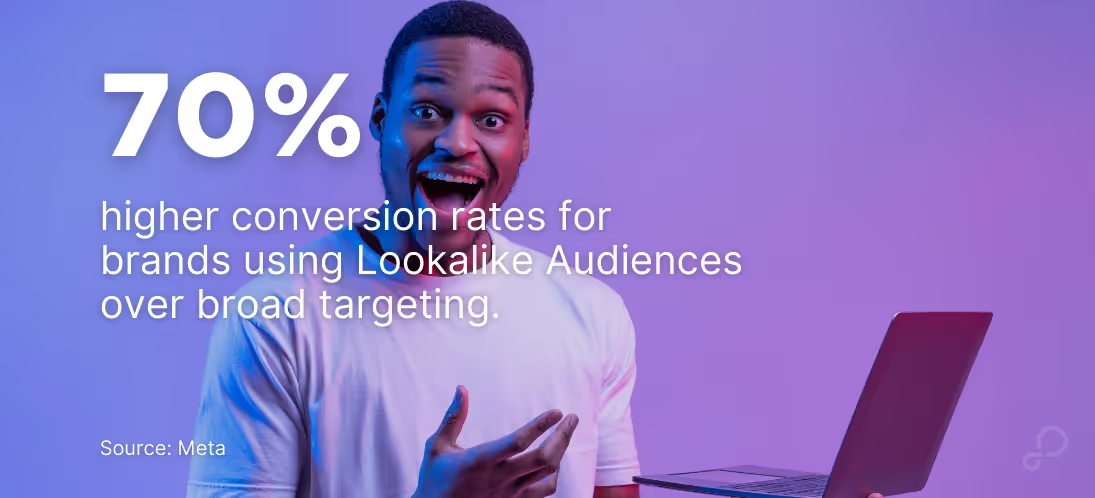
Lookalike Audiences help you find new customers who resemble your existing buyers. They work by analyzing your best customers and finding similar users across Meta’s platforms.
People who visit your site but don’t convert aren’t lost causes—they just need a nudge. Retargeting lets you re-engage these warm prospects.
It’s tempting to go broad to reach more people, but this often leads to wasted ad spend. Instead, use data-driven segmentation to refine your audience.
Your ad creative is the first thing people notice. If it doesn’t stand out, they’ll scroll right past it.
Meta prioritizes video content, but that doesn’t mean static images don’t work. The key is knowing when to use each format.
Even small tweaks to your creativity can impact performance. A/B testing helps you figure out which elements drive the best results.
User-generated content (UGC) feels more authentic and drives engagement.
.avif)
Dynamic Product Ads automatically show users the right products at the right time, making them a must-have for ecommerce brands.
🔗Preparing for AI-Driven Ecommerce: How to Optimize Product Feeds for Smarter Shopping Platforms
Unlike static ads, DPAs automatically pull from your product catalog and show users products based on their browsing behavior.
Your product feed powers your Dynamic Ads, so keeping it clean and optimized is crucial.
Not all products should be promoted the same way. Segmenting your catalog helps you target the right audience with the right products.
The right words can make or break your ad’s performance. Strong copy grabs attention and drives action.
Your CTA should tell users exactly what to do next.
“See Why Customers Love This” – Works well for social proof-based ads.
But even the best ads won’t deliver results if you’re not testing and iterating. Once you’ve fine-tuned your audience targeting, creative assets, and messaging, the next step is ensuring your budget works as efficiently as possible. Smart advertisers don’t just set up campaigns and hope for the best—they continuously test different bidding strategies, ad placements, and budget allocations to maximize performance. Now, let’s dive into how you can refine your bidding and scaling approach to get the most out of every ad dollar.
🔗 How to Scale Facebook Ads Without Killing Your ROAS
Coming up: How to test and iterate, master bidding strategies, and scale winning campaigns without overspending.
Even the best ad campaigns run into problems. Costs creep up, engagement drops, and what worked last month might not work today. The key to long-term success with Meta Ads isn’t just launching good campaigns—it’s knowing how to troubleshoot and fine-tune them when performance dips.
Here’s how to spot bottlenecks, apply quick optimization fixes, and decide whether to pivot or double down on a strategy.
If your Meta Ads aren’t delivering results, the first step is figuring out what’s going wrong. Look at these common problem areas:
a) Low Click-Through Rate (CTR)
The Problem: People are seeing your ad but not clicking.
Fix It:
Stat: The average CTR for Facebook ads across all industries is 1.57%. (LocaliQ)
b) High Cost Per Click (CPC)
The Problem: You’re paying too much for each visitor.
Fix It:
Stat: The average CPC for Facebook ads is $0.77, though it varies by industry and targeting. (LocaliQ)
c) Low Conversion Rate (CVR)
The Problem: People click, but they don’t buy.
Fix It:
Stat: The average conversion rate for Facebook ads across industries is 9.11%, though ecommerce businesses often see lower rates. (WordStream)
d) Poor ROAS (Return on Ad Spend)
The Problem: You’re not making enough money from your ad spend.
Fix It:
Benchmark: A 4:1 ROAS ($4 in revenue for every $1 spent) is considered a strong return for ecommerce brands. (Shopify)
%20(Proven%20Strategies%20to%20Optimize%20Your%20Meta%20Ads).avif)
If your ads aren’t performing well, you don’t always need a major overhaul. Sometimes, small tweaks can deliver big improvements.
Ad-Level Quick Wins
Audience-Level Quick Wins
Campaign-Level Quick Wins
Pro Tip: Many advertisers see a 15%–30% improvement in performance by simply refreshing ad creatives every 2–4 weeks. (Facebook Business)
Not every campaign needs to be scrapped when it underperforms. Sometimes, a small adjustment is all it takes to turn things around. But other times, you need to pivot entirely.
When to Pivot
If a campaign isn’t working after multiple optimizations, shift your budget elsewhere.
When to Double Down
If a campaign is performing well, scale it carefully by increasing budget in small increments (10%–20% at a time). (Facebook Ads Best Practices)
Even the best Meta Ad strategies need constant testing and tweaking. Ads get stale, audience behavior changes, and Meta’s algorithm evolves. The brands that win aren’t the ones that spend the most—they’re the ones that optimize the best.
Before you move on, go through this troubleshooting checklist and apply quick optimization wins to fix weak areas in your campaigns.
Now that you’ve fixed underperforming ads, it’s time to scale what’s working. In the next section, we’ll cover smart scaling techniques to grow your Meta Ads profitably.
Optimizing your Meta Ads isn’t just about launching campaigns—it’s about constantly testing, tweaking, and refining your approach. From audience targeting to creative optimization, every decision you make affects performance and profitability.
Meta Ads aren’t set-it-and-forget-it—they require constant testing, analysis, and refinement to stay profitable. The advertisers who succeed are the ones who pay attention to data, adjust strategies, and optimize every part of their campaigns.
You now have a proven blueprint for optimizing your Meta Ads—step-by-step strategies to help you lower costs, increase engagement, and drive more conversions. But the real results come when you put these strategies into action.
The best way to improve your Meta Ads is to test, tweak, and optimize continuously. Start by:
Insight: A/B testing is a proven strategy for optimizing customer acquisition costs (CAC) by identifying which ad variations drive the best engagement and conversions. Marketers who consistently test and refine their ads can improve user experience, increase conversion rates, and maximize ROI.
.avif)
Throwing more money at underperforming Meta Ads won’t fix them. The brands that win aren’t the ones with the biggest budgets—they’re the ones who optimize smarter.
You’ve seen what works:
That last one? It’s one of the biggest levers you can pull. Even the best ads can flop if Meta doesn’t have the right product data. If your feed is cluttered with missing details, outdated pricing, or the wrong product info, your ads will struggle no matter how much you optimize.
A clean, optimized product feed helps Meta show the right products to the right people. That means:
GoDataFeed takes the stress out of feed management so you can focus on selling. When your product data is working for you, your ads work better.
Before you increase your ad spending, ask yourself: Are you making the most of what you’re already spending?
The best advertisers don’t just spend more. They optimize better.
What’s the first thing you’re going to improve today?
Carlos Rodriguez is a seasoned content marketer with a background in marketing and advertising. Formerly at the helm of his own marketing agency, he now dedicates his expertise to guiding ecommerce merchants and marketers in mastering multichannel strategies. Outside of work, Carlos is an avid reader and hiker, often found traversing the mountain ranges of Cundinamarca like El Quinini.
Run a free feed audit and see which of your titles are matching queries you'd never choose to bid on.

%20(1).avif)