





















































For more than a decade, online retailers have lived by a simple rule: Win on Google.
So the Google Shopping feed became the universal standard—a structured file containing product titles, prices, images, and attributes that the search engine—and other advertising platforms—could read, rank, and display to shoppers.
Now, a new standard is emerging.
OpenAI has introduced the ChatGPT product feed, and it represents an architectural shift in how products get discovered, evaluated, and purchased online.
A product feed is a structured file—typically in CSV, TSV, XML, or JSON format—that contains detailed product information. But with the ChatGPT product feed, we’re moving from keyword-based retrieval to conversational reasoning.
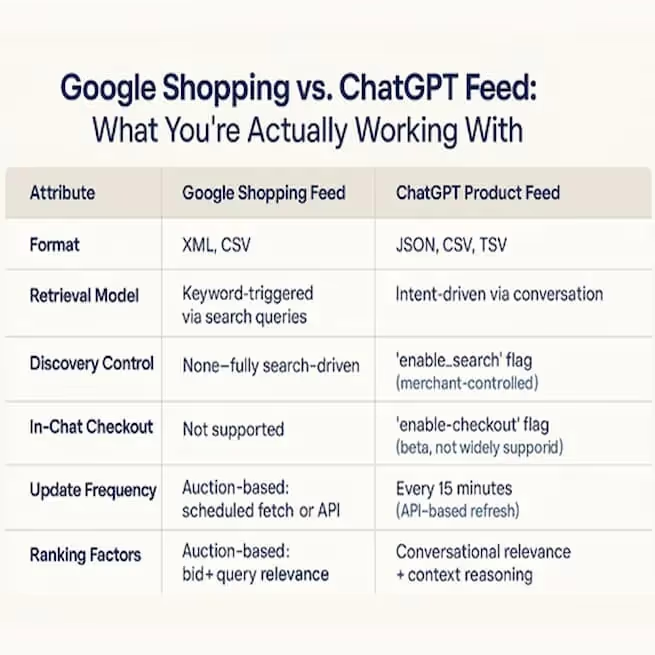
Like its Google Shopping predecessor, it includes essential product data: unique identifiers (ID, SKU, GTIN), titles, descriptions, prices, availability, images, and merchant information.
But here's where it diverges. The ChatGPT feed includes two critical boolean flags that didn't exist in traditional product feeds: enable_search and enable_checkou. These flags give merchants granular control over whether products can be discovered in ChatGPT conversations and whether users can complete purchases directly inside the chat interface without ever leaving the platform.
Once submitted, OpenAI ingests the feed, validates it against their specification, and indexes the products so they can appear when ChatGPT detects shopping intent in user queries. The system accepts updates every 15 minutes—far more frequently than Google Shopping's typical 24-hour refresh cycle—ensuring pricing and inventory accuracy in real-time conversations.
Traditional product feeds were designed for a world of keywords and clicks. A user types "waterproof running shoes size 10," Google matches those keywords to product attributes, displays a grid of options, and the user clicks through to a merchant site to complete the purchase.
ChatGPT changes this paradigm.
When a user asks, "What are the best waterproof trail running shoes for someone with wide feet who runs in rocky terrain?" they're not searching for keywords—they're having a conversation. ChatGPT interprets the intent, evaluates product attributes against multiple criteria (fit, terrain compatibility, waterproofing, reviews), and recommends specific products with explanations for why they match the user's needs.
[See the feed‑first perspective in GoDataFeed’s blog post ‘It’s Not Your Website—It’s Your Feed’.]

This conversational layer requires product data that an AI can reason about, not just retrieve. That means structured attributes like materials, compatibility specifications, sizing details, review sentiment, and return policies become essential—not optional—data points.
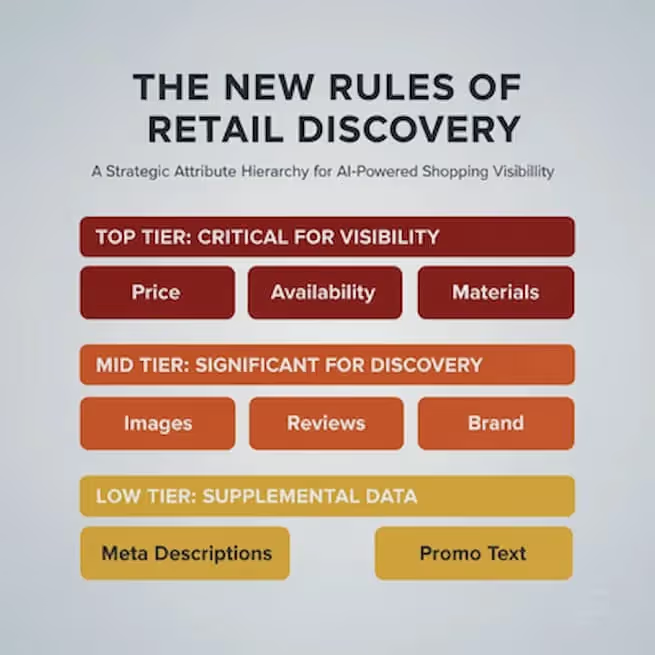
Products with incomplete or generic data simply won't surface in these nuanced, conversational queries.
Unlike Google Shopping, where paid ads and bidding strategies can influence rankings, ChatGPT's product selection is driven by relevance, not advertising budgets. OpenAI explicitly states that "products are selected by ChatGPT independently and are not ads".
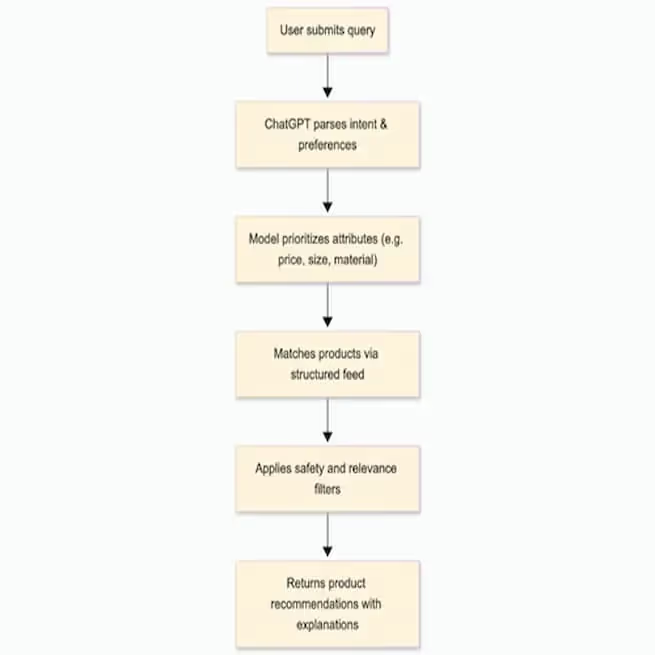
The ranking methodology combines several factors:
ChatGPT analyzes the current query, saved user preferences (like budget constraints or brand dislikes), and custom instructions to understand what matters most—price, quality, durability, or specific features.
Product metadata including prices, descriptions, reviews, and availability from merchant feeds and aggregators.
Before incorporating search data, ChatGPT generates its own understanding of what attributes are most relevant to the query. If a user mentions "budget-friendly," price becomes a priority. If they emphasize "long-lasting," review sentiment about durability weighs heavier.
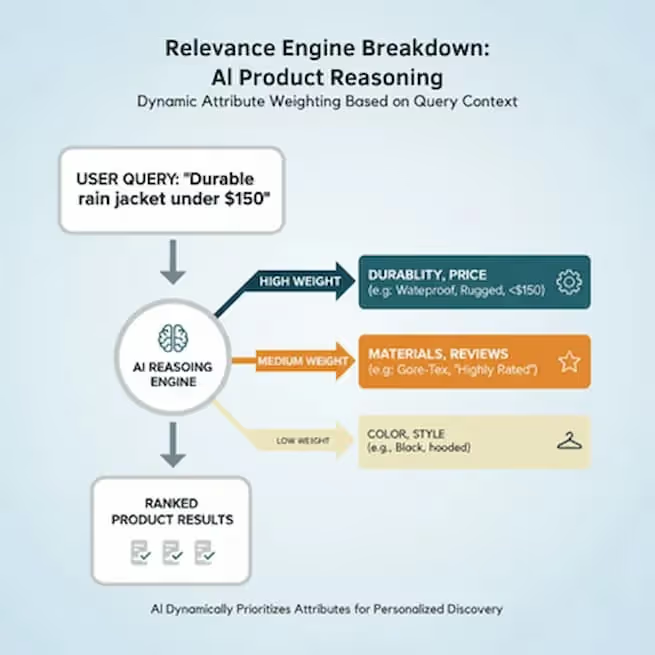
Products are matched based on how well their attributes align with the user's expressed needs, not just keyword overlap.
Products must meet OpenAI's internal safety guidelines. Inappropriate or unsafe items are excluded automatically.
This approach rewards merchants who provide comprehensive, accurate product data—creating what some experts call a "data quality moat". Unlike paid search, where budget buys visibility, ChatGPT shopping makes structured data the competitive advantage.
| ChatGPT shopping makes structured data the competitive advantage.
The implications for retail are profound. Conversational commerce—the practice of discovering, evaluating, and purchasing products through chat interfaces—is projected to reach $290 billion globally by 2025, with the conversational AI market expected to grow from $11.58 billion in 2024 to $41.39 billion by 2030 at a 23.7% compound annual growth rate.
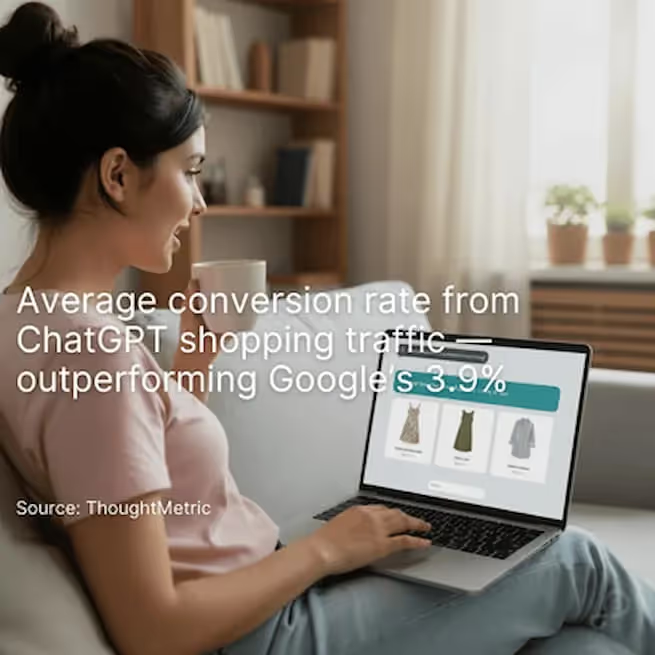
Early data suggests ChatGPT shopping traffic converts at significantly higher rates than traditional channels—some studies report 6.7% conversion compared to Google's 3.9%, while others show conversion rates as high as 112% above site averages. The quality varies dramatically based on feed optimization: brands with comprehensive structured data and rich attributes see exceptional performance, while those relying on generic web scraping see poor results.
By 2030, AI agents are expected to fundamentally reshape retail operations, from inventory management to personalized shopping experiences. Retailers who establish feed infrastructure now—while the channel is organically accessible and ad-free—will control visibility before the inevitable monetization shift, which internal OpenAI projections suggest will begin in 2026.

The shift from keyword matching to conversational reasoning means product data quality—the completeness, accuracy, and richness of your structured attributes—becomes your primary competitive lever.
[For a practical workflow, see GoDataFeed’s guide on using FeedPilot to optimize your feed logic.]
For merchants, agencies, and brand marketers, the strategic question isn't whether to optimize for AI shopping channels, but whether you'll build that capability before or after your competitors do.
The feed is the gateway. The data is the moat.
And the window for early-mover advantage is closing fast.
Bryan is a digital marketer with roots in journalism and creative writing. Over the past decade, he's helped hundreds of online retailers develop and implement ecommerce marketing strategies. When he isn't educating retailers on ecommerce, he's out exploring South Florida and stalking local breweries.
Run a free feed audit and see which of your titles are matching queries you'd never choose to bid on.

%20).avif)