




















































New research confirms a growing suspicion: the influx of traffic originating from generative AI tools like ChatGPT is fundamentally different from traditional search. A recent study out of the University of Hamburg found that while ChatGPT is increasingly sending shoppers to ecommerce sites, most of those visits fail to convert.
The challenge is no longer just attracting the click, but ensuring that the product data informing the ChatGPT's answer is accurate, persuasive, and aligned with the final conversion path. When the AI answers, it answers based on your data. If that data is poor, the subsequent click is worthless.
For ecom marketers, conversion drop-off from AI-referred traffic should inspire an immediate activation of the new ChatGPT product feed.

(CTA graphic URL for download: https://cdn.prod.website-files.com/5c6f0fe189c3683ca571d70a/69177de76535feb5f57f5306_2df64bd8af2b847868b1d66385395937_ChatGPT%20Free%20Feed%20Setup%20CTA.png) Why ChatGPT Traffic Arrives Low-Intent
Generative search provides a synthesized answer that satisfies the initial information need, creating a "curious" clicker whose low purchase intent is easily broken by any misalignment on the landing page.
AI tools like ChatGPT synthesize product information into a final, comprehensive answer.
Contrast this type of low-intent AI click (a user clicking a hyperlink buried in a text summary) with a high-intent product listing click (a user deliberately clicking a specific product image, price, and merchant name).
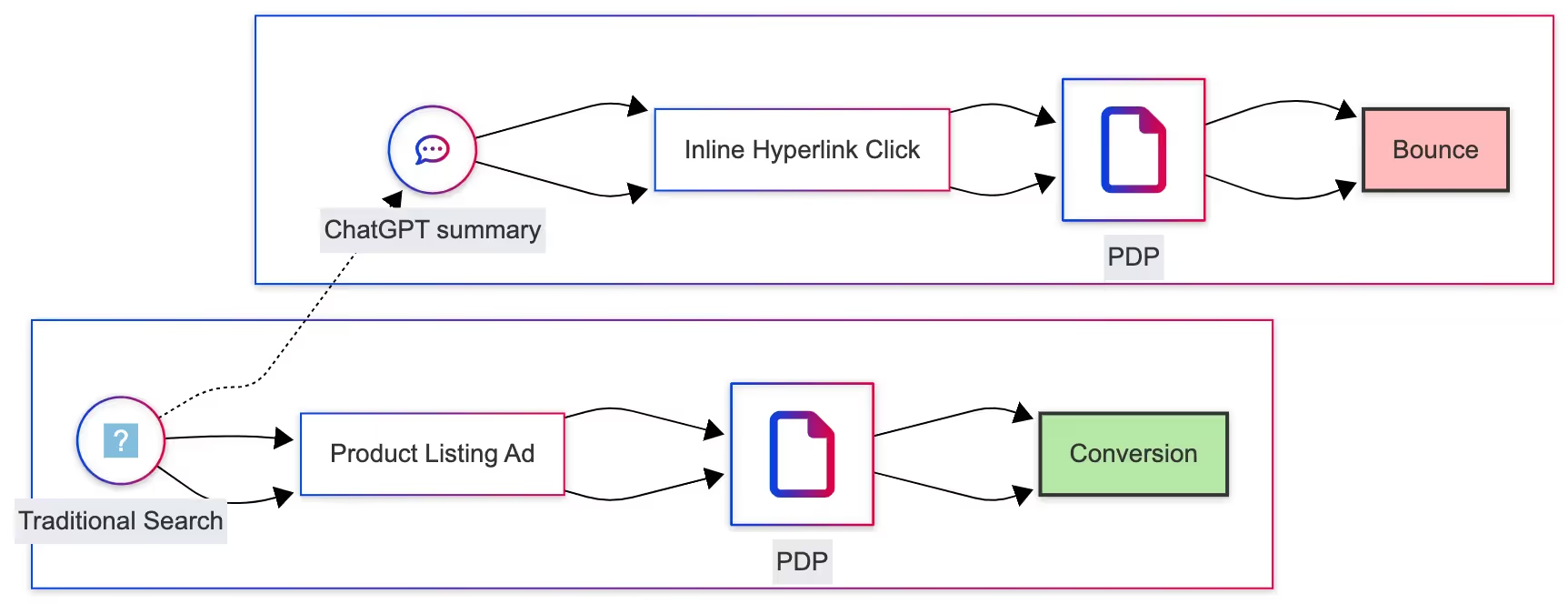
Low-intent visitors require zero friction and perfect alignment to convert. That’s where the ChatGPT product feed comes in. We’ve built this feed specifically to enable merchants to list, manage, and sell products directly through ChatGPT’s conversational interface, expanding both discovery and instant checkout for end users in the US and select regions.
[Here's how product mapping works inside GoDataFeed.]
Since ChatGPT sources product information directly from public data structures, poor attribute quality or outdated inventory creates immediate, conversion-killing misalignment.
The Critical Link is that AI feeds on structured data (product feeds, schema markup) to generate product suggestions. The AI's summary is only as good as the feed data it consumes.
Generic and unoptimized data leads to conversion failure:
[If your PDP structure is misaligned, this product page checklist can help.]

Advanced feed rules and custom labels help you pre-align product offerings with known AI information retrieval patterns, effectively treating the feed as the core Conversion Rate Optimization (CRO) lever. Here’s how:
.%20Checklist%20Graphic%20%E2%80%93%20%E2%80%9CFeed%20CRO%20Alignment%20Checklist%E2%80%9D.avif)
Titles must be hyper-specific and include the exact search qualifiers an AI is likely to summarize (e.g., "Waterproof," "4-way Stretch," "Limited Edition"). Use feed rules to inject these terms contextually, not just at the front. Ensure product descriptions are robust and structured, as AI models rely heavily on description content to formulate their persuasive summaries.
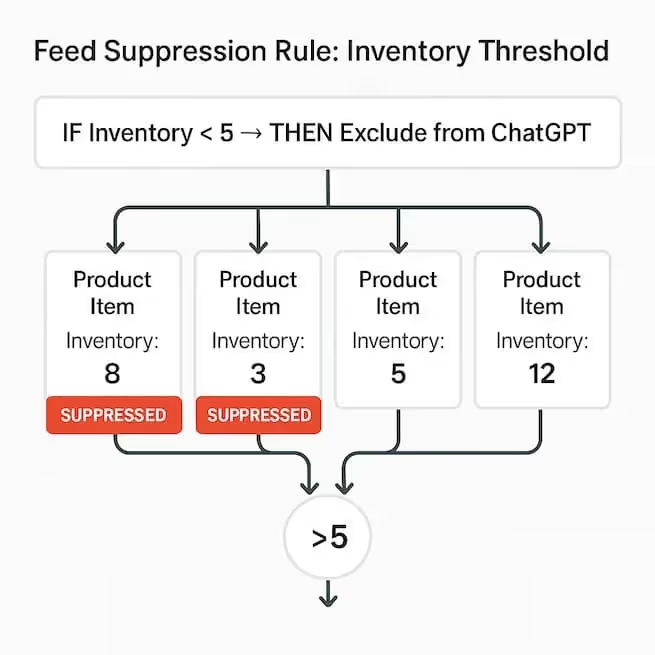
Use IFTTT-style rules in your feed tool to automatically suppress items the moment they drop below a 5-unit stock threshold. This is more aggressive than standard ad platform visibility checks and is necessary to ensure the AI never sources a high-risk, low-conversion item, protecting your downstream CRO efforts.
[Here’s how to set up group‑by suppression rules based on inventory availability.]
Use custom labels to internally tag items with strategic meta-data (e.g., custom_label_4: Best-Reviewed or custom_label_5: AI-Priority-Item). This tagging forces internal clarity on which products should receive the highest quality public-facing attributes (title, description, price) that the AI does see and summarize.
[Learn how to build those feed rules in GoDataFeed here.]
.%20Custom%20Label%20Assignment.%20Code%20Snippet%20or%20Rule%20Builder%20UI%20Mockup%20Custom%20Label%20Assignment.avif)
The conversion data is conclusive: the efficiency of new ChatGPT-driven traffic sources hinges entirely on the quality and alignment of your underlying product data.
The integrity of your ChatGPT product feed is the ultimate competitive moat for generative search traffic.
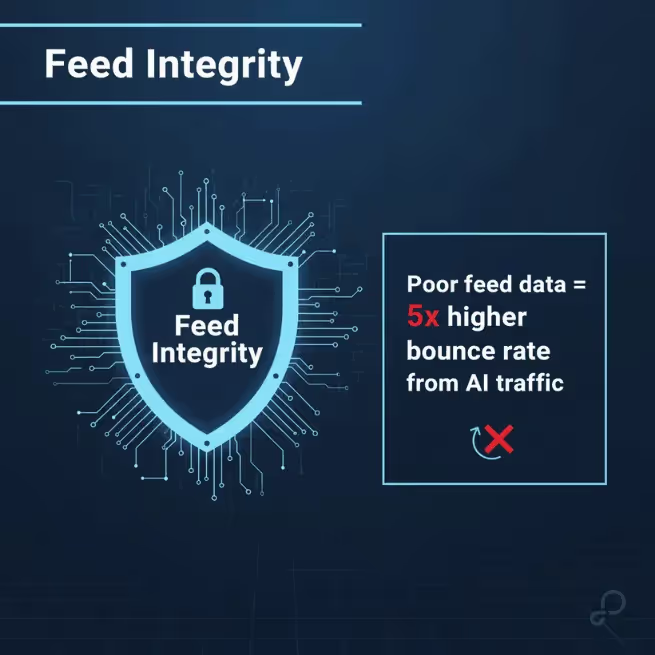
Moving forward, sophisticated data alignment—where the feed precisely matches the downstream offer—will play a key role in conversion optimization for ChatGPT traffic.
Bryan is a digital marketer with roots in journalism and creative writing. Over the past decade, he's helped hundreds of online retailers develop and implement ecommerce marketing strategies. When he isn't educating retailers on ecommerce, he's out exploring South Florida and stalking local breweries.
Run a free feed audit and see which of your titles are matching queries you'd never choose to bid on.

%20).avif)