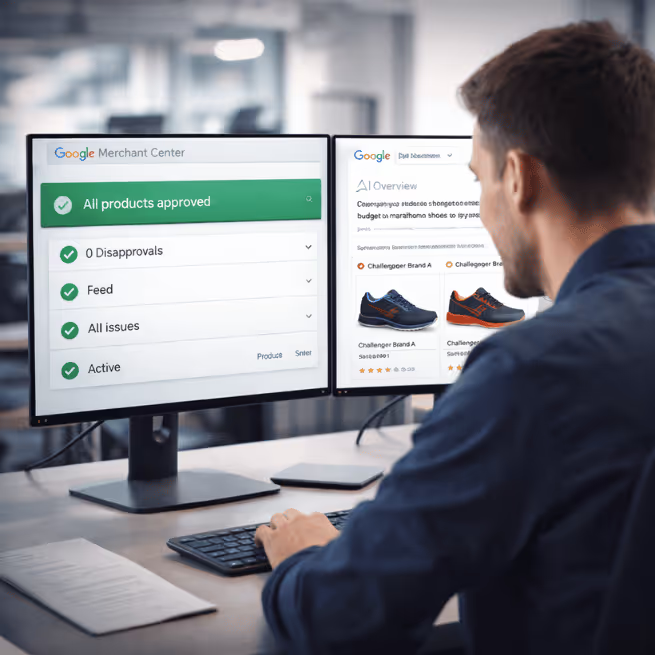




















































Imagine pouring budget into high-authority backlinks and schema markup, only for your products to be ghosted by SERPs.
The generative AI that powers today’s search engines was trained on the open web, and if real people aren’t talking about your brand’s products, the model has no evidence to recommend them.
Traditional SEO fixated on links, but AI models are trained on real-world reputation found in unstructured web discussions.
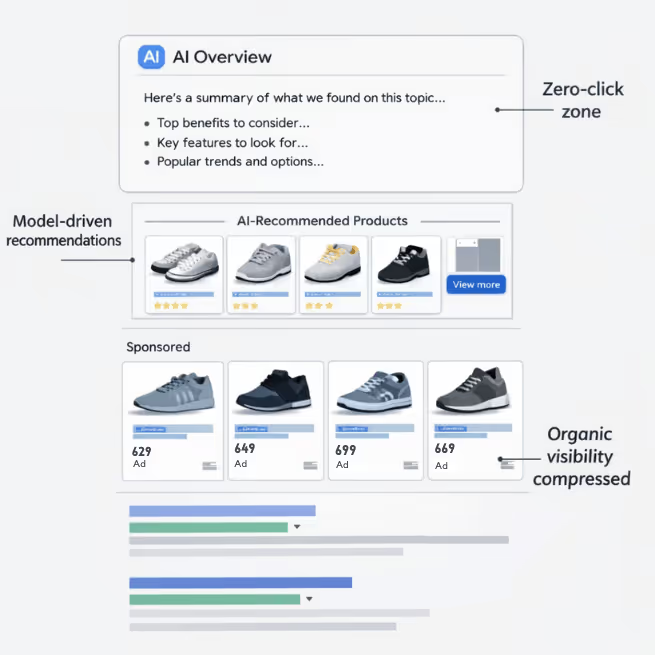
If shoppers aren’t clicking through to your site it’s probably because they’re getting answers without you. We are seeing a massive rise in Google’s AI Overviews (formerly Search Generative Experience) and other AI-powered SERP deliver answers and even product recommendations before users click anything.
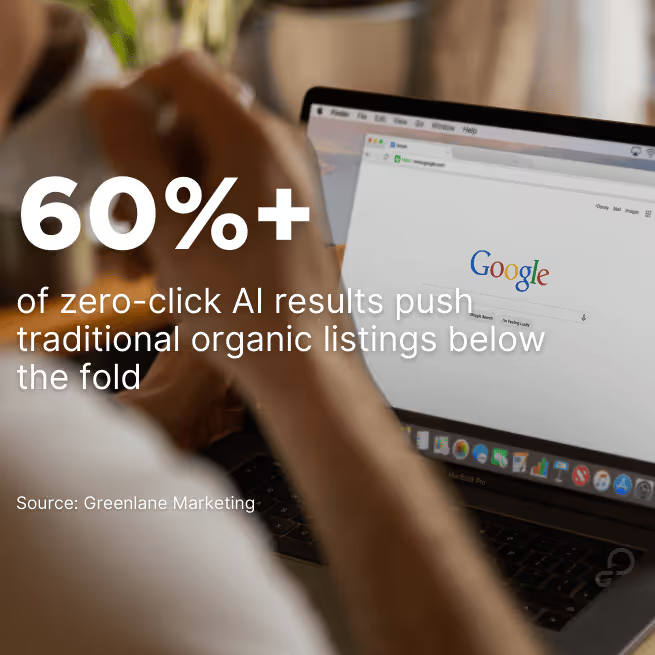
For ecommerce visibility, the impact is big: over 60% of these zero-click results now sideline standard organic listings. When a shopper searches for "best retinol serum," for example, they see an AI summary and a product carousel, pushing organic links several scrolls deep.
And even if you have used GoDataFeed to resolve every disapproval in Merchant Center, your LLM visibility will remain stagnant if the AI hasn’t seen enough evidence in its training data to “trust” your product. Technical compliance is only the baseline; AEO requires consistent third-party mentions—the external evidence that tells the model your product belongs in the answer.

Generative AI search experiences like Google AIO don't rank pages like ye olde SERPs; they synthesize trust from web chatter. In this environment, a series of unlinked brand mentions in a specialized subreddit carries more weight with the model than a high-authority backlink from a sponsored guest post.
Mentions act as "social proof" in what the AI learned from scanning websites, embedding familiarity into the model without formal link signals.
Research shows a "verification shift" happening:
Example: "DTC Shoe Brand Anomaly"
A legacy athletic brand with massive backlink numbers might lose SGE visibility to a niche challenger. The challenger seeded products to runners on r/RunningShoeGeeks, generating hundreds of technical mentions about "carbon plates" and "energy return". The AI prioritizes this "human consensus" over sterile, promotional corporate content. Unlinked forum nods provide granular metadata—like which shoe is best for achilles tendonitis—that a simple link cannot convey.
Measure your own footprint before building it. Here’s how:
Use this three-step framework to turn reputation into LLM defaults and supercharge your feeds.
Stop tracking just followers and start quantifying your "trust gap". You must reach a threshold of approximately 100+ high-context mentions per quarter to move from "noise" to "signal" in the algorithm.
Note: For a budget-friendly start, use Google Alerts or Reddit advanced search.
Step 2: Strategic Seeding
SGE cites conversational sources 2x more than static pages.
The final step is injecting this "unstructured" reputation into your structured data feeds. Use GoDataFeed’s Rules Engine to mirror the language your customers actually use.
.avif)
Implement this loop, and watch SGE citations—and ROAS—climb; next, extend to feeds demanding these signals.
Question: How many mentions trigger LLM visibility?
Answer: Aim for a "threshold effect" of 100+ high-context drops per quarter. Quality in niche forums (like r/coffee) trumps volume on generic social platforms. Use SparkToro to measure your share of conversation.
Q: Do negative mentions hurt?
A: Yes. LLMs assign a vector value to sentiment; a pattern of "Brand X + broken" acts as a "poison pill" that mathematically inhibits the AI from recommending you. Focus on 80% positive seeding to overwhelm negative signals.
Q: Can small DTCs compete without a massive budget?
A: Absolutely. "Guerrilla" tactics like Reddit AMAs and authentic TikTok UGC generate the "fresh," human content that AI models crave, allowing agile brands to outmaneuver "sterile" corporate incumbents.
Q: How does this tie to Google Shopping?
A: It’s a direct feeder. By using GoDataFeed to mirror "street" language (e.g., "wide toe box") into your product titles, you improve Ad Rank and relevance scores within PMax.
Q: What are the best tools for non-marketers?
A: Start with free tools like Google Alerts and Reddit search. As you scale, Brand24 offers an accessible AI Brand Assistant to benchmark your progress toward visibility goals.
Start by searching your brand across the communities your buyers actually use — Reddit, niche forums, YouTube comments, product review threads. What comes up (and what doesn't) tells you exactly how much ground you need to cover.
Then use GoDataFeed to close the feed side of the gap — map the language buyers use in forums and reviews directly into your Shopping titles, custom labels, and feed attributes.
Bryan is a digital marketer with roots in journalism and creative writing. Over the past decade, he's helped hundreds of online retailers develop and implement ecommerce marketing strategies. When he isn't educating retailers on ecommerce, he's out exploring South Florida and stalking local breweries.
Run a free feed audit and see which of your titles are matching queries you'd never choose to bid on.