




















































Most teams open Merchant Center diagnostics when something breaks.
The more useful moment to open them is when scaling slows down but nothing inside Google Ads explains why. That’s usually where eligibility constraints show up first.
Merchant Center already surfaces which SKUs never enter competitive auctions, which variants split conversion signal across siblings, and which listings begin losing visibility before performance reports change.The signals are there. They just rarely make it into campaign decisions, especially when feed errors pass approvals unnoticed.
In many accounts, feed ownership and campaign ownership sit in different workflows. Eligibility signals never reach bidding strategy. When that gap closes, scaling tends to follow.
Campaign performance usually starts upstream of the campaign itself.
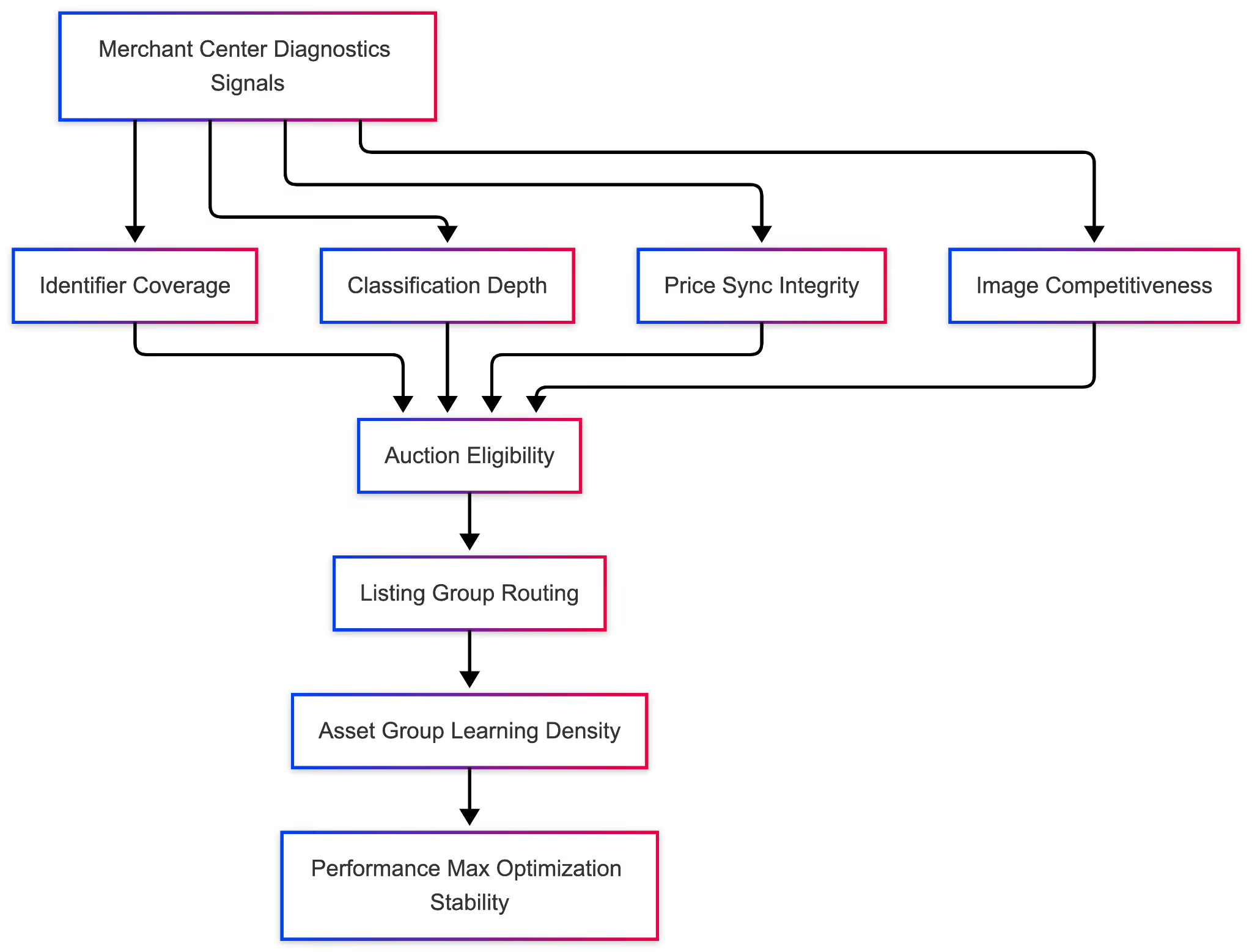
Diagnostics typically surface:
Most teams react only when products are disapproved. By then, performance impact has already started.
Missing identifiers weaken match confidence inside Google’s product graph. As match confidence drops, products qualify for fewer structured product groups and participate in fewer competitive auctions.
Increasing budgets doesn’t change how products are classified at that layer.
If campaigns plateau while demand still exists, product identifiers are one of the first places worth checking.
Inside GoDataFeed, identifier gaps are often recoverable with rule-layer mapping:
IF GTIN is missing (custom, vintage, or handmade goods)
THEN set identifier_exists = FALSE
Google assumes identifier_exists = TRUE by default. This attribute should only be set to FALSE when products legitimately do not have a GTIN, such as custom, vintage, or handmade inventory. Setting it incorrectly can trigger identifier mismatch warnings or disapprovals rather than restoring eligibility inside structured product groups.
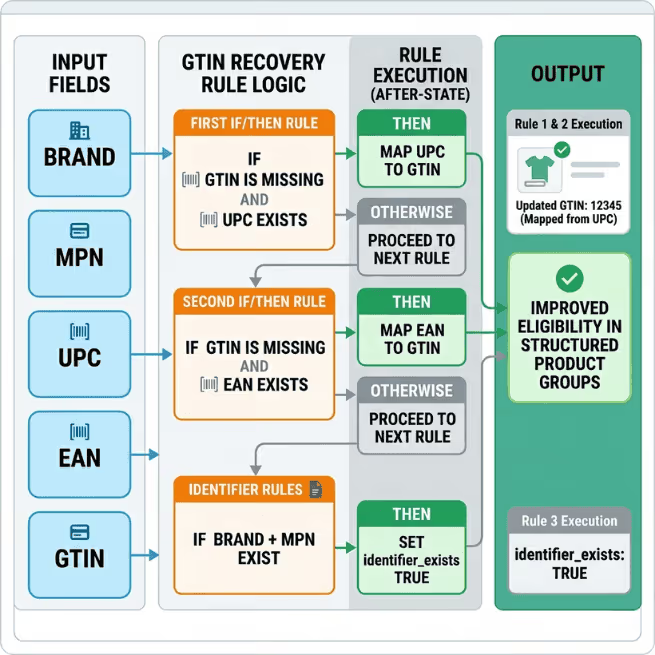
In GTIN-exempt categories like bundles, custom goods, or handmade inventory, title structure and product_type depth become the primary matching signals instead. In those cases, classification quality carries more weight than identifier coverage.
A common pattern shows up in mature accounts:
ROAS holds. CPC stays stable. Conversion rate looks normal. Revenue stops growing.
Nothing inside the bidding layer explains the slowdown.
Export SKU-level performance from Google Ads and compare it against the primary feed. The mismatch usually appears quickly:
These patterns typically indicate eligibility constraints rather than bidding performance issues.
Frequent causes include:
Example:
IF product_type_level_3 is empty
THEN map from internal_category_path
Classification depth changes which auctions products qualify for in the first place. When routing improves, impression coverage usually follows.
If half the catalog has limited visibility, the constraint often sits in taxonomy rather than budget allocation.
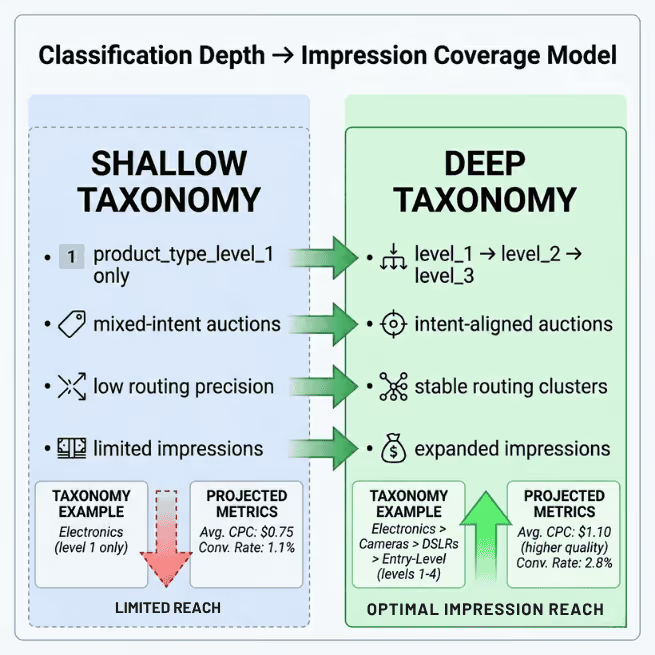
A quick diagnostic workflow that surfaces this fast:
In most accounts, impression gaps follow attribute gaps.
Performance Max aggregates learning across campaigns, but inventory still contributes signal through listing group routing and asset-group structure.
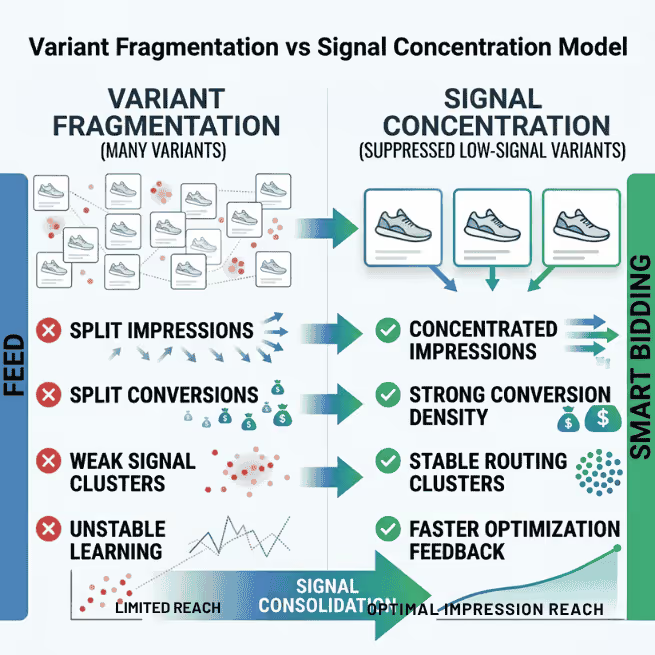
Variant-heavy submissions spread conversion history across near-identical products instead of allowing strong performers to accumulate confidence quickly.
A typical structure might include:
submitted as separate SKUs within the same asset group.
Each variant contributes separately to inventory-level signal density inside routing clusters. Instead of one SKU building a strong learning history, many SKUs accumulate partial histories that never stabilize.
Diagnostics usually make the pattern visible:
Suppressing low-signal variants where impression share exists but conversion signal does not tends to stabilize performance faster.
Example:
IF size in (XS, XXL)
THEN custom_label_2 = low_priority
Or:
IF color NOT IN (top_3_performing_colors)
THEN assign custom_label = variant_suppressed
Concentrating signal on fewer variants typically improves learning continuity more than submitting every possible option equally.
Feeds often structure custom labels around merchandising categories:
Those labels help internal catalog organization. They rarely improve bidding decisions.
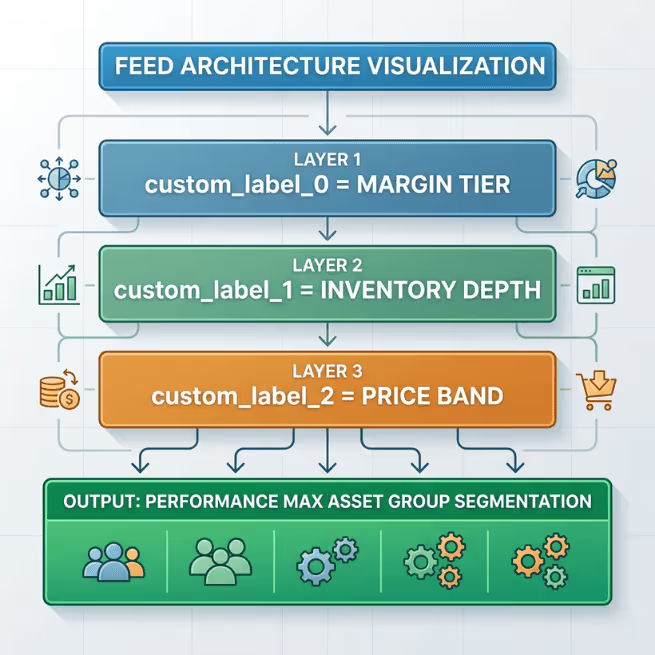
Bidding systems respond more predictably when segmentation reflects margin structure, inventory depth, or price positioning.
Example structure:
custom_label_0 = margin tier
custom_label_1 = inventory depth
custom_label_2 = price band
Separating high-margin SKUs from low-margin SKUs inside Performance Max reduces the chance that budget concentrates on high-volume products that contribute less profit.
Inside GoDataFeed, margin-tier mapping can come directly from ERP exports:
IF margin > 40%
THEN custom_label_0 = high_margin
When conversion values reflect contribution margin rather than revenue alone, feed structure begins influencing how optimization distributes spend across inventory.
Accounts scaling revenue and accounts scaling profit rarely rely on the same segmentation logic.
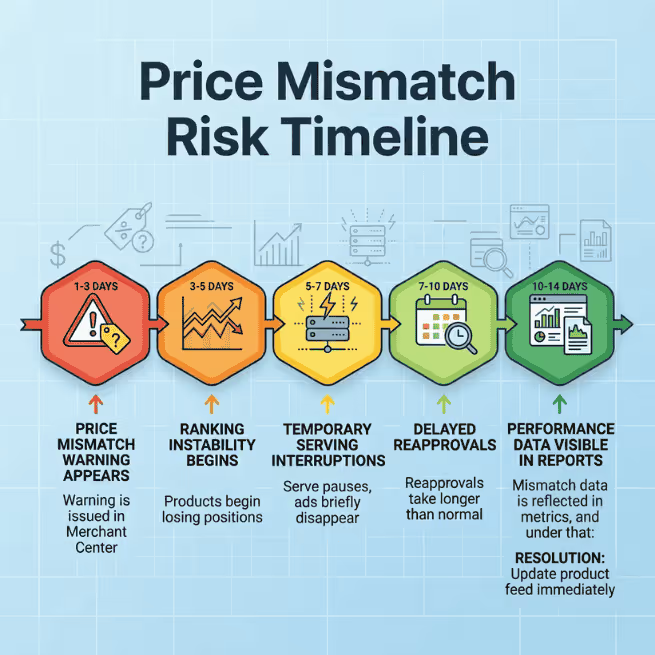
Warnings rarely interrupt delivery immediately. That makes them easy to ignore.
They still affect competitiveness.
Price mismatch risk warnings often precede:
Campaign dashboards may still look stable while auction participation shifts underneath.
Image improvement suggestions show a similar pattern in visually competitive categories like apparel and home goods. Listings continue serving, but weaker image quality often reduces relative CTR compared to competing inventory.
These signals usually appear before performance drops become measurable.
Inside GoDataFeed:
IF feed_price != site_price
THEN overwrite_with_site_price
Synchronizing price logic helps maintain ranking continuity when site updates and feed refresh cycles drift apart.
Many teams assume their ecommerce platform defines the limits of their feed structure.
Supplemental files allow channel-facing attributes to evolve independently from storefront naming conventions.
Example:
IF product_type contains "running shoes"
AND title missing gender modifier
THEN append "men's lightweight running shoes"
Adjustments like this expand query matching coverage without rewriting PDP templates or waiting on development cycles.
Adding missing product_type depth produces a similar effect. Without category depth, listing groups collapse into mixed-intent clusters. With clearer taxonomy, routing stabilizes and search-term alignment improves.
Classification quality directly shapes auction entry conditions across both Shopping and Performance Max.
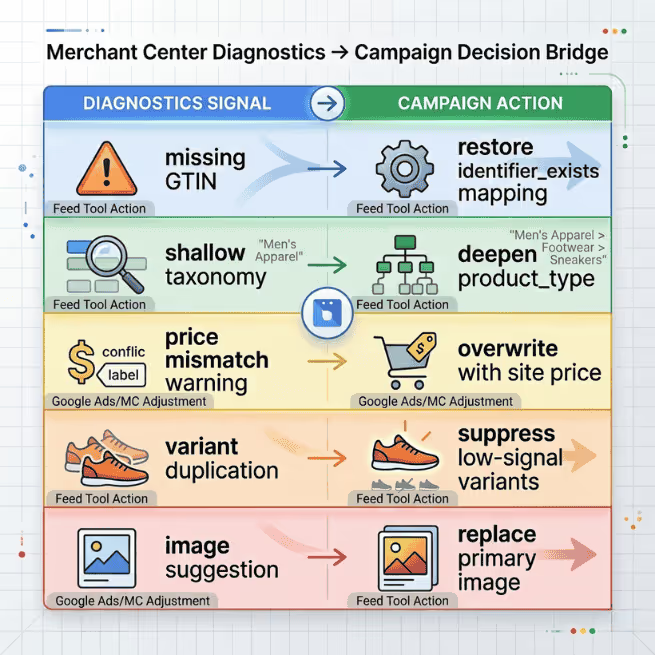
Early-stage accounts often focus on whether the feed passes approval.
More mature accounts focus on which attributes control segmentation logic.
This architectural control enables workflows like:
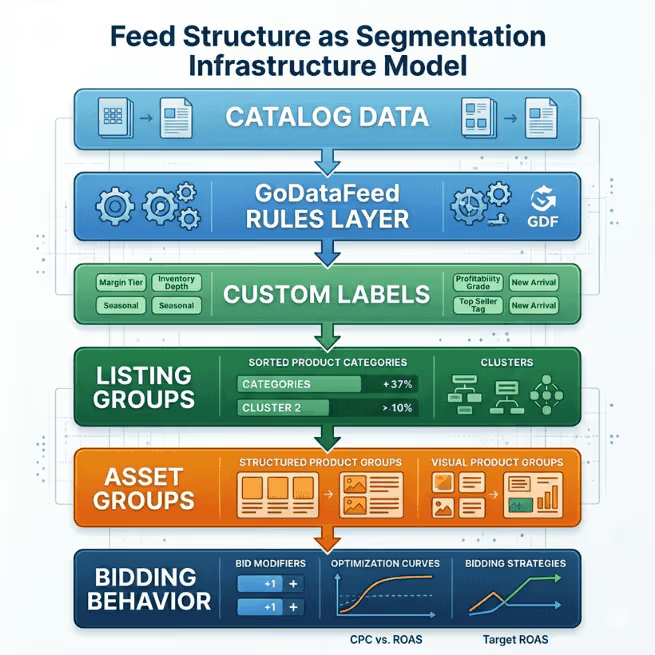
GoDataFeed sits between the catalog and the ad platforms. That position makes it a practical control layer for segmentation decisions.
Once attributes reflect performance signals instead of catalog structure alone, the feed begins influencing optimization behavior upstream.
When performance plateaus and nothing inside Google Ads explains why, a short diagnostic review usually surfaces the constraint:
This review typically takes less than an hour and frequently identifies eligibility limits affecting growth.
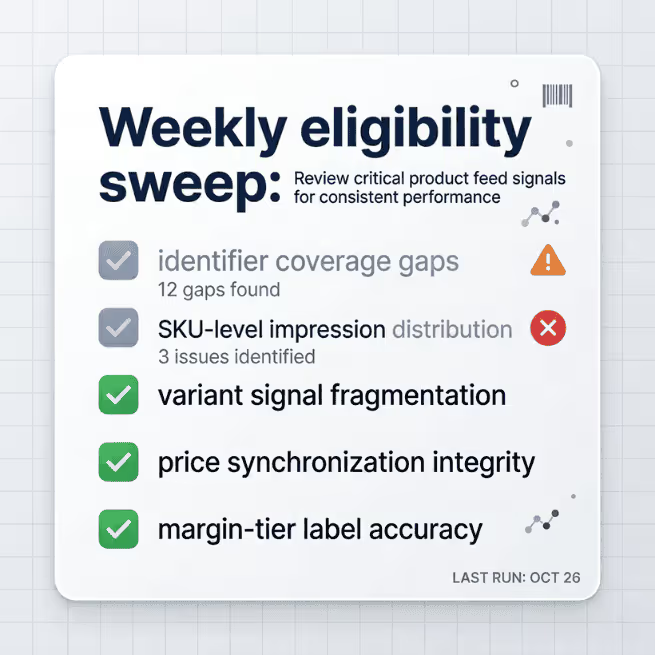
Most teams never run it.
Campaign optimization becomes more predictable when eligibility structure supports it.
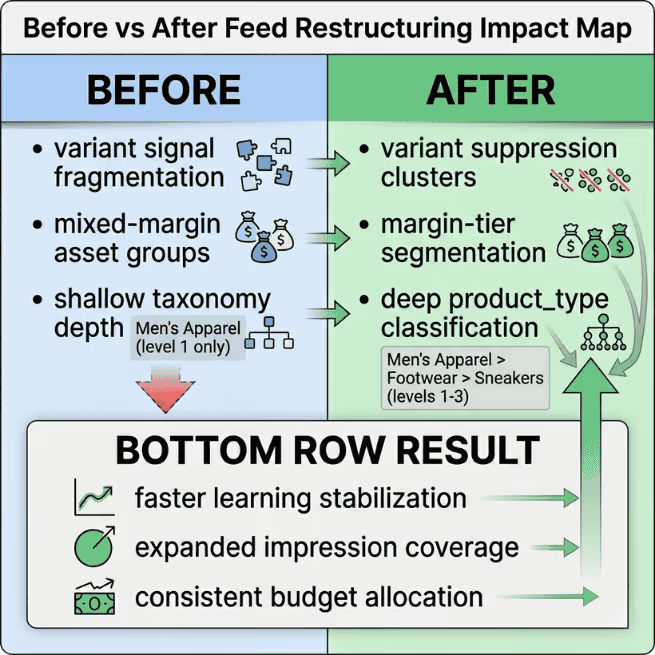
For example:
Before restructuring:
After restructuring:
Learning stabilizes faster, impression coverage expands, and budget allocation becomes more consistent across high-value inventory.
When scaling slows without a clear explanation in the bidding layer, the constraint often sits in feed structure rather than campaign settings.
Carlos Rodriguez is a seasoned content marketer with a background in marketing and advertising. Formerly at the helm of his own marketing agency, he now dedicates his expertise to guiding ecommerce merchants and marketers in mastering multichannel strategies. Outside of work, Carlos is an avid reader and hiker, often found traversing the mountain ranges of Cundinamarca like El Quinini.
Run a free feed audit and see which of your titles are matching queries you'd never choose to bid on.