





















































Acquisition is expensive, but the real cost isn't the first click—it's failing to get the second one.
A recent study of over 3,000 online stores confirmed a harsh reality: Only 14.8% of first-time customers return to place a second order.
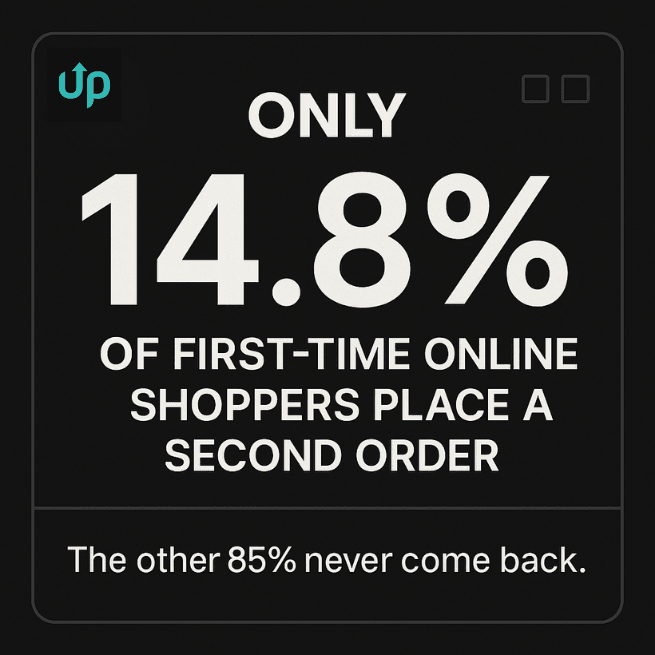
For performance marketers facing rising Customer Acquisition Costs, this isn’t just a retention stat; it’s a profitability crisis. If 85% of your customers are one-and-done, your business is stuck on a costly acquisition treadmill.
The solution isn't to just pay for more traffic. It's to pivot resources toward channels designed to drive Lifetime Value: Dynamic Remarketing and Email Marketing.
[The Connection Between Data Feeds and ROI: Learn how feed quality drives real revenue impact beyond ad performance.]
And to do that, you need to stop treating your product feed like a static list for Google Shopping and start treating it as the engine for your retention strategy.
For most DTC brands, the "Second Order Math" is simple:
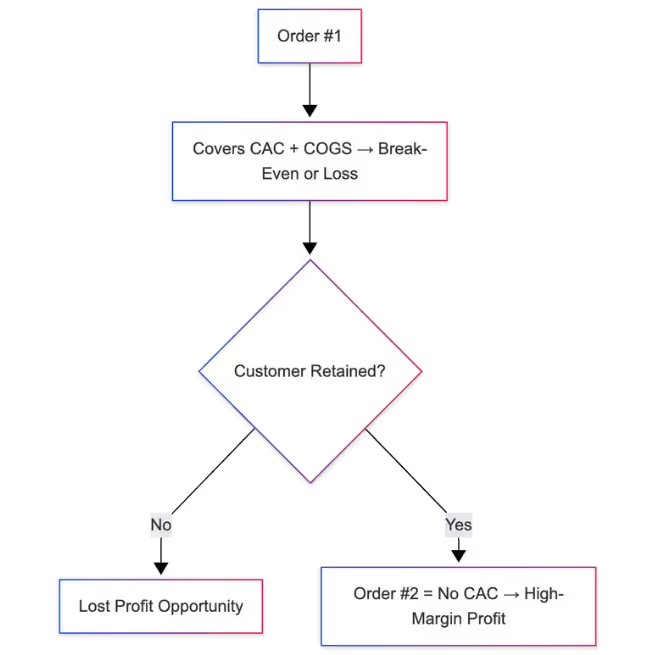
As marketers, we often fall into the "Trap of Gross Revenue," obsessing over ROAS on the initial campaign while ignoring the massive efficiency gap caused by low repeat rates.
Stop optimizing your data solely for that first, low-margin transaction. Start structuring your product data to pave the path for the next purchase.
Here’s how:
The standard remarketing playbook is lazy: "You looked at this shoe, so here is that shoe again."
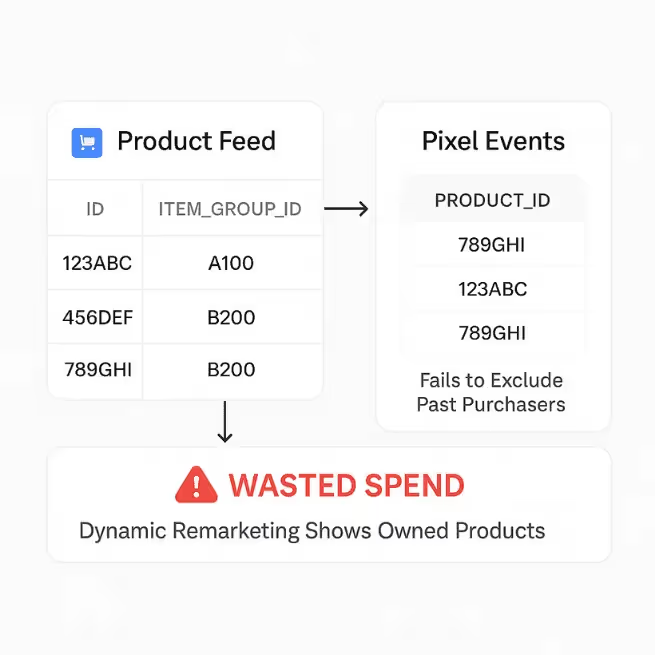
That works for abandonment, but it fails for retention. If a customer just bought a jacket, showing them that same jacket for two weeks isn't nurturing—it's annoying. And it’s a waste of ad spend.
While your ad platform (Google or Meta) handles the actual exclusion of recent purchasers via pixel data, your product feed is what powers the relevance of what they see next.
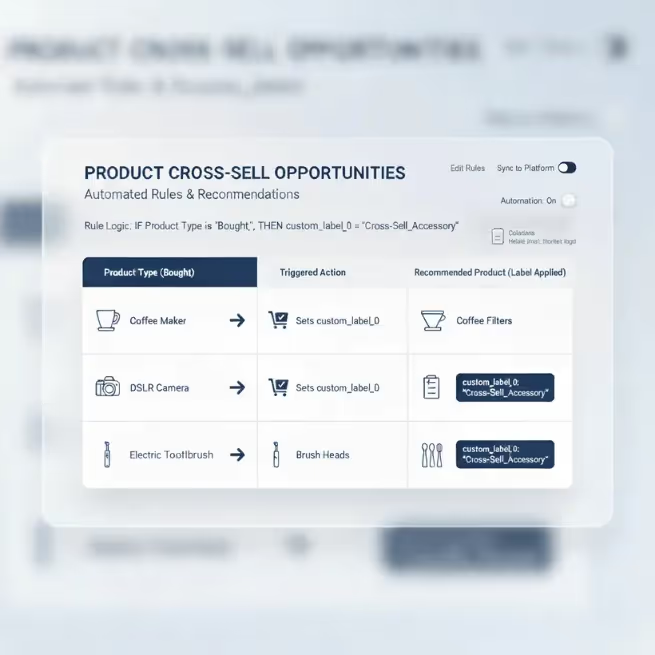
Email remains your highest-LTV channel because you control the environment and the cost is marginal . But generic "newsletter" blasts don't drive retention—personalized, data-driven flows do.
If you use a platform like Klaviyo, its ability to recommend products is only as good as the catalog data you feed it.
Standard Shopping feeds often break in email inboxes. You need a dedicated feed or "Custom Catalog" optimized for this channel.
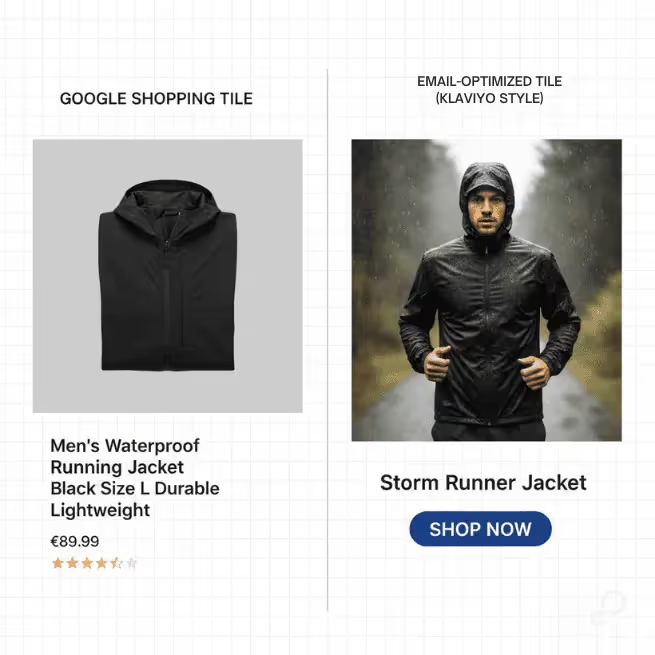
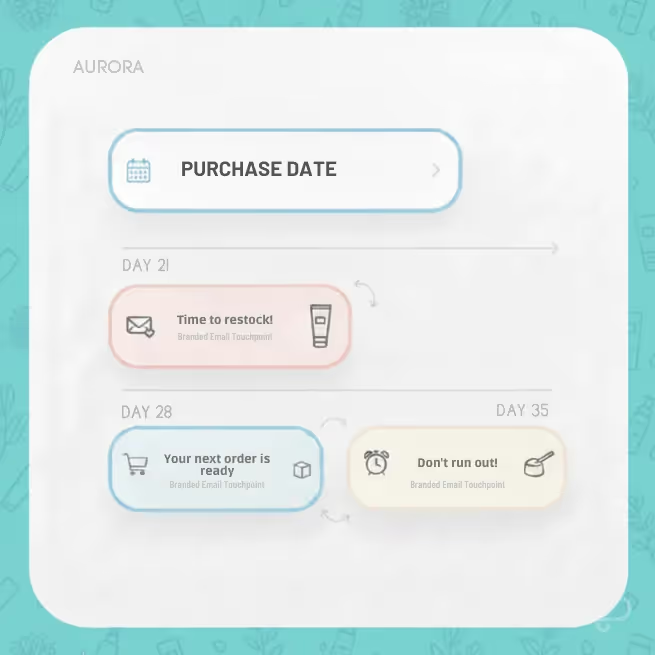
The 14.8% statistic is a wake-up call to marketers: Align your feed segments with your post-purchase goals. That’s how you turn a one-time buyer into a profitable, lifelong customer.
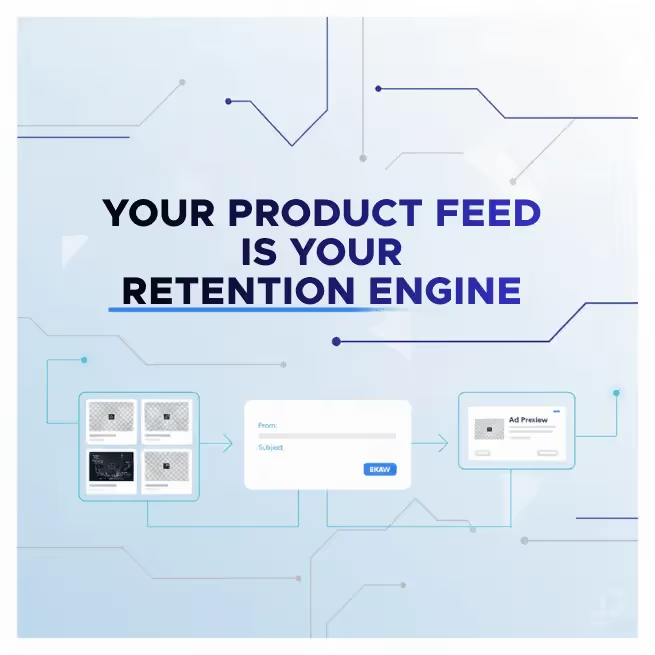
The success of Dynamic Remarketing and Email Marketing campaigns is directly tied to the granularity of the product feed. If your product feed is only doing enough to get you by on Google, you are actively sabotaging your LTV strategy.
Bryan is a digital marketer with roots in journalism and creative writing. Over the past decade, he's helped hundreds of online retailers develop and implement ecommerce marketing strategies. When he isn't educating retailers on ecommerce, he's out exploring South Florida and stalking local breweries.
Run a free feed audit and see which of your titles are matching queries you'd never choose to bid on.

%20).avif)